How California’s New Recycling Law and AI Sorting Are Changing Discarded Clothing
California's EPR law and new AI sorting infrastructure are maturing together, creating systems to process discarded garments at scale. What it means for brands and resale.
California’s textile extended producer responsibility law and AI-powered sorting infrastructure are maturing in parallel. The state passed the Responsible Textile Recovery Act (SB 707) in 2024, requiring fashion brands and retailers to fund textile collection and recycling. That law hit its critical deadline on July 1, 2026, when producers had to register with Landbell USA, the state-designated administrator. Simultaneously, the partnerships designed to handle what the law requires are beginning operations.
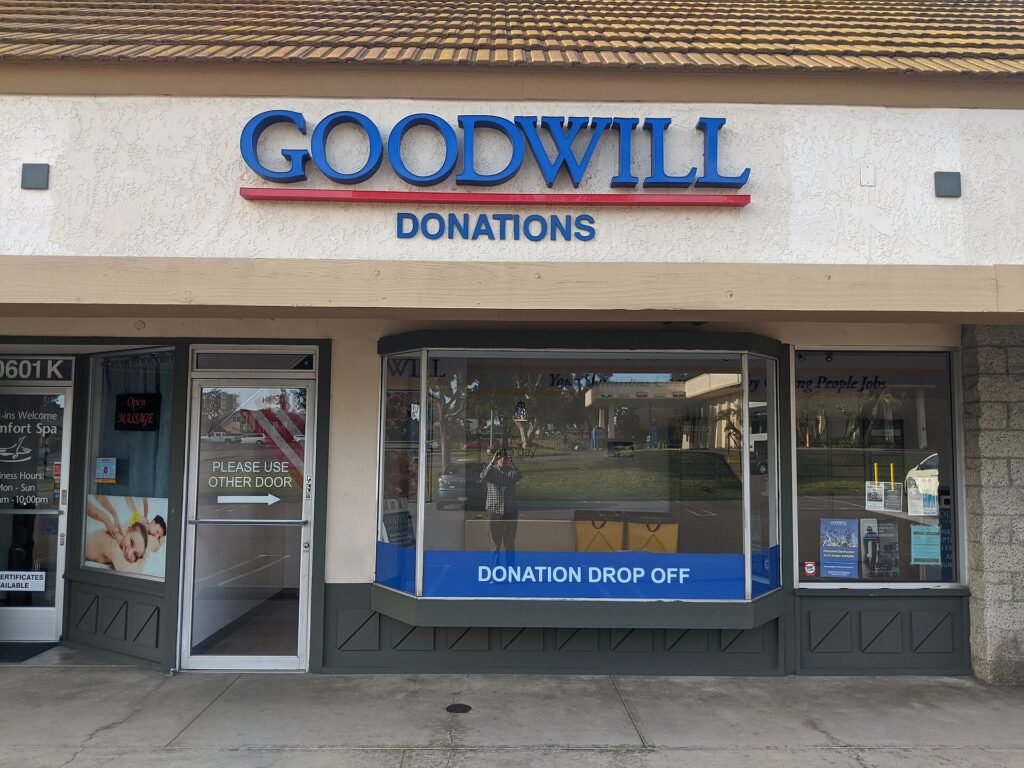
Waste Management, Goodwill, and Reju—a French textile-to-textile regeneration company—have been collaborating since 2024 to build collection, sorting, and recycling infrastructure. Their partnership demonstrates how new sorting technology and regulatory mandates are reshaping what happens to discarded and returned clothing: more items stay in circulation longer, and materials unsuitable for resale get processed into new fibers rather than discarded.
How the sorting system works
Goodwill maintains donation centers within 10 miles of 94 percent of Californians, making it a natural collection hub. When textiles arrive at WM’s sorting facilities in North Carolina and Arizona, AI-powered systems analyze each garment. These systems use spectroscopy and machine learning to identify fiber composition and condition—distinguishing, for instance, between pure polyester and polyester-elastane blends, or detecting damage that affects resale value.
Higher-quality items get routed back to Goodwill’s retail stores. Lower-quality textiles and pure polyester pieces flow to Reju, which converts them into regenerated polyester fibers. The company produces Reju Polyester with a 50 percent lower carbon footprint than virgin polyester, according to its claims.
Waste Management’s investment, Goodwill’s network, and Reju’s processing technology create a system that aligns with what California’s EPR law requires: capturing discarded textiles and steering them into reuse or recycling rather than landfills.
California’s textile EPR timeline
Producers must register with Landbell USA by July 1, 2026. Landbell USA must complete a needs assessment and develop a stewardship plan by March 2027. CalRecycle must adopt implementing regulations by July 2028, after which Landbell USA has 12 months to submit its plan. Full program implementation will extend through 2030.
What the law requires
California’s EPR law shifts responsibility for textile waste management from municipalities to brands and retailers. Producers of apparel and other covered textile products must join Landbell USA by July 1, 2026, and contribute to a fund that pays for collection, sorting, repair, remanufacturing, and recycling infrastructure across the state.
The registration deadline has already passed, but the work extends much longer. CalRecycle, the state’s regulatory body, selected Landbell USA as the producer responsibility organization on March 1, 2026. The organization must complete a needs assessment and develop a stewardship plan by March 2027. CalRecycle must adopt implementing regulations by July 2028, after which the organization has 12 months to submit the plan to CalRecycle. Full program implementation will run through 2030, creating years of regulatory uncertainty for producers trying to understand their obligations and costs.
Sarika Bajaj, CEO of Refiberd, expects the EPR law to direct funding toward infrastructure investments. That money could accelerate adoption of sorting technologies like the AI systems now running in WM’s facilities.
Why Rochester matters
Reju is investing $390 million in a textile regeneration hub at Eastman Business Park in Rochester, New York—its first facility in the Americas. The 145,000-square-foot facility, expected to open by late 2029, will use proprietary technology developed with IBM Research to convert polyester textiles into usable fibers.
When fully operational, the Rochester facility is projected to regenerate the equivalent of 300 million garments annually that would otherwise end up in landfills. The project is expected to create about 70 jobs, including engineers, technicians, machinists, and production workers. The Northeast Goodwill Circularity Hub—a collective of eleven Goodwill organizations across the Northeast—has agreed to supply polyester-rich materials to the facility.
The scale indicates confidence that demand for recycled polyester will grow. Reju operates a plant in Frankfurt, Germany, expected to produce 1,000 metric tons annually, and is building the Rochester facility to serve North American brands and retailers.
Goodwill maintains donation centers within 10 miles of 94 percent of Californians, making it a natural collection hub.
The infrastructure challenge
California’s EPR law assumes robust sorting and recycling infrastructure exists or can be built quickly. It doesn’t. Textile sorting in the United States has historically been done manually, with workers reading care labels and assessing condition by eye. That process is slow and inexact—labels can be wrong, faded, or removed, and human judgment varies.
AI-powered optical sorting accelerates the process and improves accuracy. Spectroscopy can identify fiber content without labels, and machine learning can detect defects invisible to casual inspection. But deploying these systems at scale requires capital investment and industry coordination. The WM-Goodwill-Reju partnership addresses both: WM brings logistics and facilities, Goodwill brings a national network of collection points and sorting expertise, and Reju brings processing technology for materials unsuitable for resale.
Whether these partnerships can scale fast enough to handle the volume California’s law will generate remains unclear. Goodwill collectively keeps 4.4 billion pounds of goods in circulation annually across North America, but textile-specific capacity is smaller. The Rochester facility alone is projected to regenerate materials from the equivalent of 300 million garments a year.
What brands face
Producers were required to register with Landbell USA and join California’s program by July 1, 2026. The law covers apparel, footwear, accessories, and home textiles sold into the state. Brands must track California sales, report to Landbell USA, and fund the organization’s collection and recycling work. The exact fee structure hasn’t been finalized.
For large retailers and brands with national distribution, compliance is straightforward but costly. For smaller producers and online sellers, the administrative burden and compliance costs may be significant. Landbell USA’s stewardship plan, which the organization must develop by March 2027, will clarify how fees will be calculated and how money will flow to collection and processing infrastructure.
The parallel maturation of California’s law and industry infrastructure means brands will face both regulatory pressure and market incentives to manage textile waste responsibly. The law requires it; the infrastructure is beginning to exist to make it possible.
Related coverage: How a New California Law Makes Fashion Brands Pay to Recycle Clothes.
Photo: Mds08011 · CC BY 4.0 · via Wikimedia Commons