Urban Outfitters Offset 60 Basis Points of Tariff Pressure Without Raising Prices
Urban Outfitters faced 60 basis points of tariff-driven margin pressure but offset it through occupancy leverage and inventory discipline, not broad price increases.
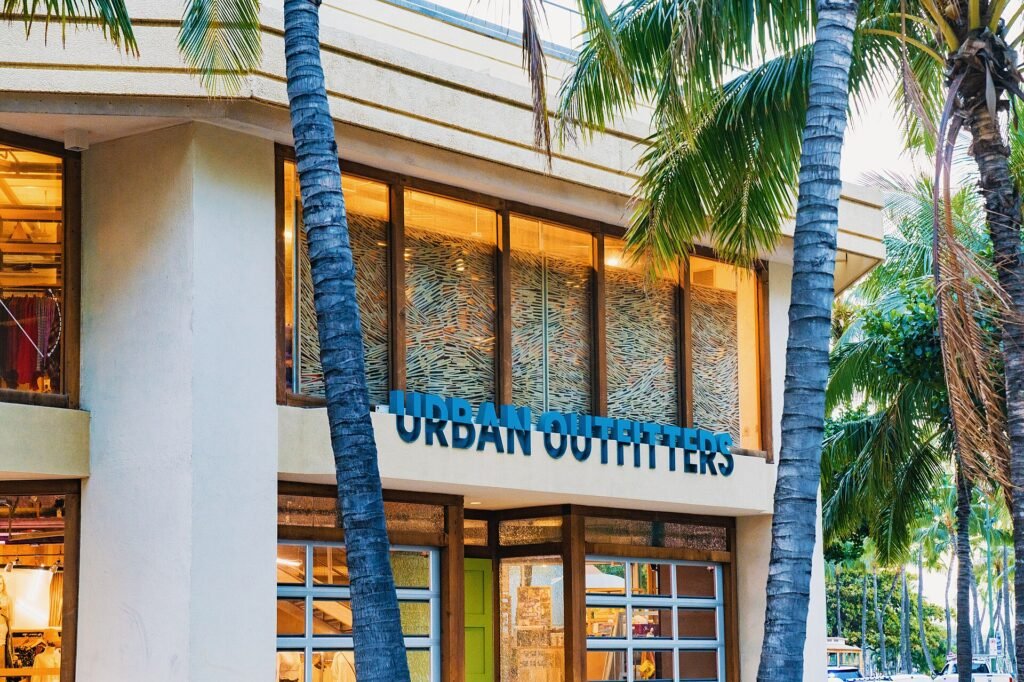
Urban Outfitters faced roughly 60 basis points of tariff-driven margin pressure in its fiscal 2026 third quarter—a period spanning from August through October 2025. The company’s response reveals how specialty retailers are adapting to structural tariff costs largely without raising prices: rather than passing most of the cost to consumers, Urban Outfitters protected its gross margin rate through occupancy cost leverage and disciplined inventory management.
The strategy succeeded. Despite the tariff headwind, Urban Outfitters expanded gross margin by 31 basis points in Q3 2026, maintaining a 36.8 percent gross profit rate. Total revenues were up more than 12 percent year-over-year. The company’s approach offers a case study in how retailers manage external cost shocks without passing them directly to the consumer.
The tariff environment that prompted this response began in early 2025, when the U.S. government enacted significant changes to its tariff regime that increased rates on a substantial number of imports. The company disclosed that these tariffs, combined with inbound freight fuel surcharges tied to geopolitical disruptions, would create structural headwinds to profitability unless offset by operational improvements.
The 60 Basis Point Tariff Impact
Tariff costs hit retailers through imported merchandise. Urban Outfitters, which sources products globally for its four brands—Urban Outfitters, Anthropologie, Free People and Menus & Venues—absorbed the impact as U.S. tariff rates rose beginning in early 2025. The company’s apparel, home goods and accessories come from overseas suppliers, and tariffs increased its incoming inventory costs before any markups were applied.
Management disclosed the tariff impact with precision: approximately 60 basis points of gross margin reduction in Q3 2026. For context, a basis point is one-hundredth of a percentage point, so 60 basis points equals 0.6 percentage points of gross profit margin.
The tariff headwind persisted and expanded into 2027. The company also faced uncertainty about tariff policy. Temporary global tariffs under Section 122 of the Trade Act, instituted in February 2026, were later ruled unauthorized by the Court of International Trade but remained in effect until their expiration on July 24, 2026, when the government instituted new Section 301 tariffs tied to investigations into forced labor practices, with additional tariffs still possible.
The Numbers
Urban Outfitters absorbed 60 basis points of tariff-driven margin pressure in Q3 2026 but expanded gross margin by 31 basis points overall through occupancy leverage, inventory discipline and supply chain adjustments. The company received a $95.7 million tariff refund in Q2 fiscal 2027 following a March 4, 2026 Court of International Trade ruling that IEEPA tariffs were unlawful.
Understanding Occupancy Leverage From Comparable Sales Growth
Urban Outfitters’ primary offset came from occupancy cost leverage, a mechanism central to retail profitability. In retail, occupancy costs—rent, utilities, property taxes and depreciation on leasehold improvements—are largely fixed expenses that do not change when sales increase. When a store’s sales per square foot increase while these fixed costs remain constant, the occupancy cost as a percentage of total sales declines.
To understand this mechanism, consider the math behind it. If a store pays $500,000 in annual rent and occupancy costs and generates $10 million in sales, occupancy runs 5 percent of sales. If that store’s sales grow to $10.8 million—an 8 percent increase matching Urban Outfitters’ comparable retail sales growth in Q3 2026—occupancy drops to approximately 4.63 percent of sales. That decline of about 37 basis points flows directly to gross margin.
This is why comparable store sales, also called same-store sales, matters so deeply to retail analysts and investors. Comparable store sales measure the performance of existing stores, excluding revenue from newly opened or recently closed locations. This metric isolates organic growth from inorganic growth driven by store expansion. Analysts use it to determine whether a retailer is generating stronger sales from its established base or merely expanding its store count.
The occupancy benefit from that growth, combined with lower markdowns, partially offset the 60 basis points of negative tariff impact. In its fiscal 2027 second-quarter report, management cited a similar dynamic, stating that gross margin improvement came from “leverage in store occupancy costs due to the increase in comparable Retail segment store net sales” and leverage in delivery expenses from fuel-surcharge mitigation initiatives.
Selective Store Closures as Part of Occupancy Management
A secondary element of occupancy management involved targeted store closures. In fiscal year 2026, the company planned to close approximately 17 stores while opening around 69—a net addition of approximately 52 locations. The closures represented less than 3 percent of the company’s store base, signaling selective pruning rather than broad retreat.
Closing unprofitable or low-productivity stores has a direct mathematical effect on portfolio-wide occupancy metrics. When a retailer shuts a location that generates weak comparable sales and fails to cover its occupancy costs, that location’s high cost-per-dollar-of-sales no longer drags down the company-wide average. The remaining stores benefit from improved occupancy ratios on the consolidated basis.
Urban Outfitters did not disclose specifically which locations it closed or their profitability profiles. However, the company’s net positive store expansion—closing around 17 while opening around 69—signals that the closures targeted genuine underperformers rather than a broad retreat from physical retail. For fiscal 2027, management expected to continue this strategy: closing approximately 18 stores while opening 54 new locations. This disciplined approach allows the company to maintain physical retail presence while removing cost drags.
Markdown Discipline Rather Than Broad Price Increases
Rather than broadly raising ticket prices to offset tariff costs, Urban Outfitters protected margin mainly through reduced markdowns—a counterintuitive strategy that requires tighter inventory management and more accurate demand forecasting. The company achieved this through better inventory management, disciplined buying with limited buffer stock, and improved demand planning.
Retail gross margin is built on two foundations: the initial markup (wholesale cost plus the planned profit spread) and the markdown rate (discounts taken to clear inventory). When inventory is tight and demand forecasts prove accurate, a retailer can sell most merchandise at full price. When inventory is excessive or demand disappoints, the retailer must take markdowns to clear stock, reducing gross profit dollars.
Urban Outfitters’ strategy centered on “protecting margin more through inventory discipline than through procurement savings alone.” By reducing buffer stock and tightening inventory management, the company sold a higher percentage of its merchandise at full price or with minimal markdowns. Each percentage point reduction in overall markdown rate translates directly to gross margin expansion without any price increase to consumers.
However, this strategy carries risk. Incorrect demand forecasts can lead to either lost sales if inventory runs short or excessive markdowns if inventory piles up. Urban Outfitters navigated this balance successfully in 2026, though management cautioned investors that demand could soften in subsequent periods. The company’s Anthropologie brand showed strength, though the Anthropologie Group posted higher markdown rates in a later quarter, suggesting some inventory management challenges.
Rather than broadly raising ticket prices to offset tariff costs, Urban Outfitters protected its gross margin rate through occupancy cost leverage from strong comparable sales and disciplined inventory management.
Supply Chain Transformation to Avoid High-Tariff Origins
Urban Outfitters also began restructuring its sourcing to avoid the highest-tariff countries. India recently imposed a 50 percent tariff on goods from the country, creating significant pressure to shift country-of-origin mixes away from Indian suppliers. Anthropologie increased its own-brand penetration—merchandise sold under Urban Outfitters’ own labels rather than third-party branded products—to a historical high, more than 100 basis points above the prior year.
Private-label or own-brand merchandise offers sourcing flexibility. Rather than being locked into specific suppliers or countries for branded goods, a retailer can source the same private-label item from multiple origins. This diversification allows Urban Outfitters to avoid tariff concentration risk by routing sourcing around the highest-tariff jurisdictions.
Management also renegotiated vendor terms, explored alternative origins for key products, and embedded new lead times into planning calendars. These supply chain adaptations take time to implement and only show margin benefits in quarters beyond the initial tariff shock. But they signal the company’s commitment to treating tariffs as permanent structural costs rather than temporary headwinds to be absorbed and passed through.
The Tariff Refund Windfall and Future Outlook
Urban Outfitters received an unexpected benefit from a U.S. Court of International Trade ruling on March 4, 2026. The court ordered that tariffs collected under the International Emergency Economic Powers Act (IEEPA) were unlawful and directed U.S. Customs and Border Protection to process refunds. The ruling applied broadly to all importers that had paid IEEPA tariffs, not just those that had filed lawsuits.
Urban Outfitters was one beneficiary of this ruling. The company received approximately $95.7 million in tariff refunds, primarily in the second quarter of fiscal 2027. This refund, when recorded, added 576 basis points to that quarter’s gross margin—a dramatic but one-time benefit. The Court of International Trade directed U.S. Customs and Border Protection to process the refunds, and CBP said it was developing a new electronic system to handle the claims; legal analysts noted the government is expected to appeal the CIT ruling, potentially complicating the refund process.
The refund was a windfall but not a sustainable offset to ongoing tariff pressure.
Photo: Tony Webster · CC BY 2.0 · via Wikimedia Commons