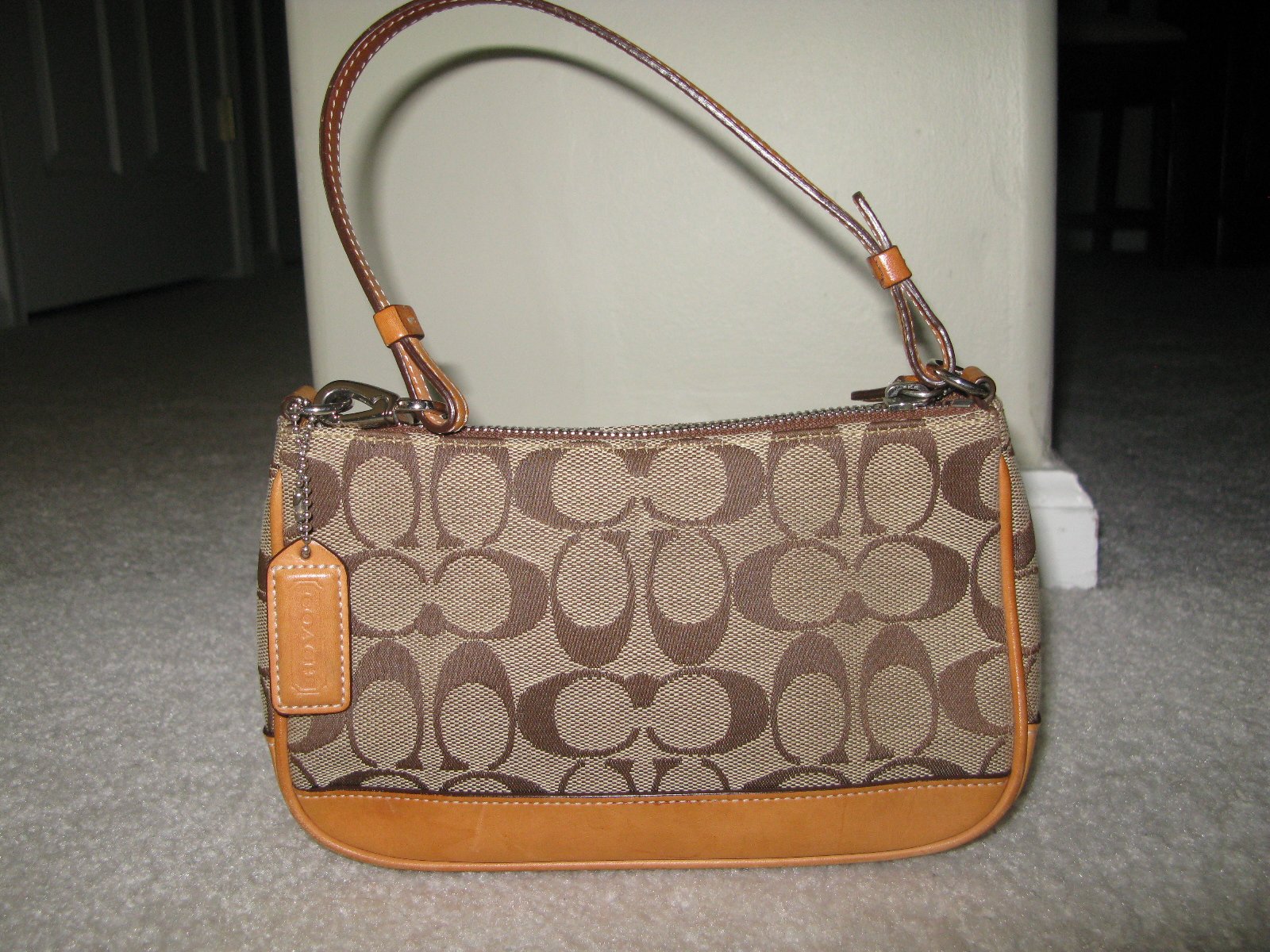
Coach Grows 24% as Kate Spade Falls 10% Inside Tapestry’s Handbag Portfolio
Key takeaways
- Coach generated $6.91 billion in revenue with 24% growth, now accounting for about 86% of Tapestry’s $8 billion annual sales
- Tapestry opened 66 Coach stores while closing 24, but closed 40 Kate Spade locations and opened only 6, signaling a strategic shift away from the struggling brand
- The accessible-luxury handbag market increasingly tilts toward brands with Gen Z appeal and consistent growth; Coach attracted an estimated 800,000 new Gen Z customers in fiscal 2026
Tapestry’s fiscal 2026 results tell two stories within one company. Coach generated $6.91 billion in revenue, a 24% increase that accounted for about 86% of Tapestry’s $8 billion in annual sales. Kate Spade, once positioned as the company’s second pillar, fell to a $1.07 billion business with a 10% decline. The divergence reflects a hard reality in accessible luxury: the category prizes growth and momentum over brand diversity, and right now Coach has both while Kate Spade does not.
The company’s store strategy makes that divergence concrete. Tapestry closed 24 Coach locations but opened 66 new ones, ending the fiscal year with a net gain of 42 Coach stores. By contrast, it closed 40 Kate Spade locations and opened only 6. The asymmetry reveals where Tapestry’s leadership is placing its bets: Coach, which has demonstrated consistent double-digit growth across every quarter of fiscal 2026, merits continued real estate investment. Kate Spade, which lost ground while Coach gained it, requires the deliberate, phased strategy CEO Joanne Crevoiserat described for the brand before new stores make sense. That shift—from growth mode to stabilization mode—will likely reshape how the accessible-luxury handbag market consolidates around winners and challengers.
Understanding the Accessible-Luxury Segment
The accessible-luxury handbag market sits between mass-market retailers and heritage luxury houses. Coach and Kate Spade, Tapestry’s two flagship handbag brands, both compete in that segment.
Success in that segment requires balance. Prices must be high enough to suggest quality and durability, low enough that customers view them as attainable rather than aspirational. Products must appeal to younger consumers who increasingly make purchasing decisions on social media and through online channels, but the quality must justify the price over multiple years of use. That dynamic has crystallized around two imperatives: a brand must grow consistently, signaling that shoppers trust its positioning, and it must reach Gen Z, the customer segment that now drives discretionary spending in fashion and accessories.
Tapestry’s Fiscal 2026 by the Numbers
Coach revenue reached $6.91 billion with 24% growth, while Kate Spade fell to $1.07 billion with a 10% decline. Tapestry opened 66 Coach stores but only 6 Kate Spade locations, while closing 24 Coach and 40 Kate Spade stores, ending with 1,299 total locations. Coach now represents about 86% of Tapestry’s $8 billion in total annual revenue.
Coach’s Momentum and Growth Formula
Coach achieved all of that in fiscal 2026. The brand grew revenue 24 percent year-over-year, with every quarter posting double-digit growth—a consistency that separates Coach from competitors who spike and dip. That growth extended across geography: Greater China posted a 38 percent revenue increase, North America, the brand’s home market, grew 15 percent. Even Japan, where Tapestry reported an overall 10 percent revenue decline, provides context for Coach’s strength: the brand’s growth in other regions more than offset weakness there.
Pricing power illustrates Coach’s market position. Coach’s handbag average unit retail—the average price customers pay before discounts—increased at a “mid-teens rate” during fiscal 2026. That means Coach simultaneously raised prices and sold more volume, a combination that only works if customers believe they are receiving value. The company attributed that pricing success partly to higher-quality leather goods, with handbags driving expansion. That product strategy allows Coach to compete against mass-market alternatives on quality and heritage, while remaining more accessible than heritage luxury houses.
Younger consumers responded. Coach attracted an estimated 800,000 new Gen Z customers in fiscal 2026. Winning those customers early means capturing market share that competitors will struggle to reclaim. Tapestry’s own research showed that approximately 35 percent of the 11 million new customers the company acquired company-wide were Gen Z.
What the Store Strategy Reveals
Retail expansion and contraction tell a story about confidence. Tapestry’s overall store footprint actually expanded during fiscal 2026, ending the year at 1,299 locations. But the composition shifted dramatically. The company opened 72 new stores while closing 64, a net addition of 8 locations—modest by growth standards, but the distribution matters enormously. Of the 72 openings, 66 were Coach and only 6 were Kate Spade. Of the 64 closures, 24 were Coach and 40 were Kate Spade.
That split reveals two different hypotheses about brand health. Coach store closures likely targeted underperforming locations in weak markets or locations where the brand’s e-commerce presence made physical retail redundant. Closing 24 stores while opening 66 nets to a 42-store gain, suggesting Tapestry is relocating Coach to better locations and markets where the brand can drive more traffic. For Kate Spade, the opposite calculus applies: closing 40 stores while opening only 6 suggests the company is contracting physical retail presence and reallocating resources toward product innovation and marketing, part of the deliberate, phased strategy CEO Crevoiserat described for the brand.
In Tapestry’s case, consumer preference has moved decisively toward Coach.
Kate Spade’s Challenges and Reset
Kate Spade’s 10 percent revenue decline in fiscal 2026 contrasts sharply with Coach’s growth within the same company. Some of that loss likely went to Coach, which competes directly in Kate Spade’s historical market segment. But the loss also suggests that Kate Spade failed to maintain Gen Z appeal in the way Coach did.
Tapestry’s response acknowledged the problem without minimizing it. CEO Crevoiserat said the company’s strategy for Kate Spade “has been deliberate and phased, streamlining the business, solidifying the foundation, and positioning the brand to scale.” That language signals pause: the company will not rapidly expand Kate Spade’s physical footprint until product and positioning improve. Real estate expansion—opening new stores—requires confidence that a brand can drive traffic and convert customers. Kate Spade’s sales trajectory suggests that confidence is currently misplaced.
The reset differs fundamentally from Coach’s strategy. Where Coach is expanding retail presence and raising prices because demand supports both moves, Kate Spade is consolidating to fewer, higher-performing locations and investing in the underlying brand. That difference reflects different underlying health. Coach has momentum across product, pricing, and customer acquisition. Kate Spade must build that momentum before expansion makes sense.
Market share in accessible luxury tilts sharply toward the incumbent with momentum, and Coach has it.
What This Means for the Accessible-Luxury Market
Tapestry’s results illuminate how the accessible-luxury handbag market now operates. The category is not static—brands can move up or down based on execution. Coach’s sustained growth, Gen Z appeal, and ability to raise prices while increasing volume demonstrate what winning looks like. The brand captured younger consumers by offering quality products at mid-premium prices through channels—social media, e-commerce, physical retail in strong locations—where those customers actually shop.
Kate Spade’s decline, by contrast, shows the cost of losing momentum. The brand once competed in that same space, but without consistent growth and Gen Z appeal, that positioning no longer guarantees market share. Competitors including Coach took market share. The company must now spend time and resources rebuilding positioning and products before retail expansion makes financial sense.
For retail analysts and investors in fashion, Tapestry’s earnings reveal a market that increasingly tilts toward concentration. Accessible-luxury handbag shoppers now have clear preference signals: Coach has growth, innovation, and younger customer appeal; Kate Spade does not. That gap will likely persist until Kate Spade can demonstrate sustained sales growth and rebuild its Gen Z customer base. Until then, Tapestry will continue investing primarily in Coach.
The Company’s Longer-Term Outlook
Tapestry projected fiscal 2027 revenue between $8.4 billion and $8.5 billion, representing mid-single-digit growth. The company also projected operating margin expansion of approximately 50 basis points while assuming a neutral net year-over-year impact from tariffs. That guidance depends almost entirely on Coach sustaining or accelerating its current momentum.
Leadership left no ambiguity about its ambitions. Tapestry stated it sees “a clear path to Coach becoming a $10 billion brand.” That milestone would require sustained double-digit growth from a brand currently generating $6.91 billion in annual revenue. The statement signals confidence in Coach’s market position, customer appeal, and pricing power. It also signals concentration risk: Tapestry’s entire growth outlook rests on one brand exceeding expectations.
For the accessible-luxury handbag market more broadly, Tapestry’s results and outlook offer clarity about how winners are chosen. Brands that can reach Gen Z, offer products at mid-premium price points, and deliver consistent growth across regions and customer cohorts can expand. Brands that cannot do all three face pressure to reset, stabilize, or shrink. Coach’s 24 percent growth, expanding store footprint, and generational customer appeal put it squarely in the first category. Kate Spade’s performance, for now, places it in the second. That dynamic will likely persist until Kate Spade stabilizes and grows, which Tapestry says it is working to achieve, or until market conditions shift in ways that reward different brand positioning or price points.
Photo: Tinton5 · CC BY-SA 3.0 · via Wikimedia Commons