How Milan’s record fashion week calendar signals designer transitions and market confidence
Key takeaways
- Moschino debuts Loris Messina and Simone Rizzo, founders of experimental menswear label Sunnei, joining an unprecedented wave of creative director appointments across luxury houses
- Milan’s calendar reaches a record roughly 218 total appointments, including 60 runway shows; the September 2025 edition drew over 149,300 visitors and generated €238.9 million in tourism impact, per Confcommercio Milano
- Creative transitions signal luxury houses’ shift toward faster innovation cycles despite research showing rapid turnover risks weakening brand loyalty and confusing consumers
Milan Fashion Week opens Tuesday, September 22 with Prada’s runway show and a calendar marked by significant creative transitions that reshape the business landscape for major luxury houses. The week, running through September 28, will feature roughly 218 total appointments—including 60 runway shows, 54 of them in person and six digital, plus presentations and events—marking a record scale for the Italian fashion center. Milan Fashion Week’s September 2025 edition generated a total tourism impact of €238.9 million for the city, according to Confcommercio Milano’s research center.
The most prominent transition arrives Friday, September 25, when Moschino unveils its debut collection under new creative directors Loris Messina and Simone Rizzo. Their appointment exemplifies a broader industry reckoning: luxury houses are undergoing what analysts describe as an unprecedented wave of creative leadership turnover. This shift reflects mounting pressure to accelerate innovation cycles and chase consumer demand for novelty, even as research suggests rapid turnover can weaken brand loyalty and fragment brand identity.
The creative director turnover wave reshaping luxury
The current moment marks an unprecedented turnover in creative leadership at luxury fashion houses. Historically, the role was anchored in long-term stewardship—Karl Lagerfeld spent 36 years at Chanel—providing consistency and cultivating coherent brand language over decades. Today, tenures are markedly shorter, with high-profile exits occurring after just a few seasons. This shift reflects the modern consumer’s appetite for constant novelty and designers’ difficulty remaining relevant under accelerated fashion cycles.
The business impact of these transitions can be significant. A new creative director’s arrival often renews interest in a brand and can boost demand on resale platforms, particularly when tied to a viral moment, reflecting a link between leadership news and consumer engagement. However, experts caution that short contract lengths—typically three years—may not provide sufficient runway for designers to realize their full potential at heritage brands. The industry faces a strategic tension: successful transitions like Hedi Slimane’s at Saint Laurent, which doubled revenues in under four years, validate the model, while cautionary tales like Lanvin’s struggle to recover relevance under frequent changes suggest risks of alienating existing customers.
Milan Fashion Week by the numbers
Milan Fashion Week September 2026 runs September 22–28, featuring roughly 218 total appointments, including 60 runway shows (54 in person and six digital) plus presentations and events. Milan Fashion Week’s September 2025 edition drew over 149,300 visitors and generated a total tourism impact of €238.9 million, according to Confcommercio Milano.
Moschino’s strategic gamble on experimentation
Messina and Rizzo founded Sunnei in 2014 as a direct-to-consumer menswear label, expanding into womenswear in 2018. Neither attended traditional design schools. They built Sunnei into one of Milan’s most irreverent, internet-fluent labels, known for its color, wit, and offbeat approach to Italian style. This vocabulary, developed outside the constraints of heritage-house hierarchies, gave Sunnei an outsider’s perspective.
Their creative approach proved commercially viable. Sunnei became known for experimental runway presentations and satirical design language that generated press coverage and social-media engagement beyond typical fashion-industry channels. The brand’s success demonstrated that design talent operating independently could cultivate coherent creative voices and build consumer loyalty without the infrastructure of a luxury conglomerate.
Moschino replaced Adrian Appiolaza, who had served as creative director since early 2024, with Messina and Rizzo in a move Aeffe’s executive chairman, Massimo Ferretti, described as recruiting leaders with “a contemporary creative vision, a deep cultural sensibility, and the ability to develop relevant and distinctive creative languages.” For the business side, the shift carries explicit intent. Moschino’s parent company, Aeffe, sought creative leadership capable of reclaiming cultural relevance in a crowded market where visual novelty and editorial momentum drive consumer awareness and wholesale placement. The house is known for its irreverent designs and artful absurdism—positioning that has lost competitive momentum in recent years. By recruiting founders who built a brand on playfulness and internet fluency, Moschino signals a strategic choice to prioritize disruption over continuity.
Milan’s calendar expansion and market positioning
Milan’s September 2026 calendar represents a notable expansion in runway real estate. The 60 shows—54 of them in person, six digital—compare favorably to prior seasons and signal both rising demand for Milan as a fashion destination and the Camera Nazionale della Moda Italiana’s strategy to attract new and established brands to the city. The scale matters financially: more shows mean more attendees, more press coverage, and more leverage for the city’s luxury-goods ecosystem. Last September, Milan’s fashion week drew over 149,300 visitors, a 15 percent increase over 2024, according to Confcommercio Milano’s research center, underscoring the global commercial importance of the calendar.
Prada’s positioning as the week’s opener—showing Tuesday at 2 p.m. CET rather than its traditional Thursday slot—underscores the schedule’s growing complexity and the negotiation required between major houses competing for optimal timing and editorial attention. Giorgio Armani closes the week on Sunday, continuing the house’s long-standing practice of providing a ceremonial conclusion to Milan’s presentations. These positioning decisions matter because they influence international media schedules, buyer attention spans, and the overall narrative arc of the week’s coverage.
Luxury houses continue to value fashion-week calendars as essential marketing infrastructure, viewing runway debuts as critical moments for cultural positioning and commercial validation.
Notable absences and delayed debuts
Versace remains absent from the Milan calendar for the second consecutive season, a conspicuous gap in the month’s lineup. The house appointed Pieter Mulier as creative director effective July 1, 2026, but postponed his runway debut until Fall 2027. The decision to delay likely reflects either the need for additional development time or a strategic choice to build anticipation and allow Mulier sufficient runway to construct a coherent creative vision before public presentation. The absence matters commercially because Versace generates significant press gravity and buyer attendance; its removal from September’s schedule reshuffles the competitive landscape for editorial coverage and retail partnerships.
Bottega Veneta will present the third collection from Louise Trotter, the house’s creative director. Trotter’s tenure has been watched closely by the industry as a test case for whether external design hires—particularly those without deep family or corporate ties to the house—can develop sustained creative vocabularies that resonate commercially. This scrutiny reflects the industry’s broader uncertainty about whether short-tenure creative directors can build meaningful brand momentum. Fendi and Missoni will also present new collections, with particular focus on Maria Grazia Chiuri’s direction at Fendi and Alberto Caliri’s stewardship of Missoni. Both houses are attempting to stabilize creative direction after experiencing prior leadership transitions, making their presentations critical moments for demonstrating sustained vision.
What these transitions signal about luxury strategy
The record calendar and creative transitions arriving at Milan in September reflect several converging industry trends. Luxury houses continue to value fashion-week calendars as essential marketing infrastructure despite decades of digital presentation capability. This persistence reflects a calculated business judgment: runway shows remain superior to digital or direct-to-buyer channels for generating editorial momentum, buyer enthusiasm, and social-media engagement. When luxury conglomerates changed creative direction, media coverage often intensified sharply, suggesting that the cultural weight of these appointments extends beyond industry insiders.
The appointment of Messina and Rizzo represents a specific strategy: luxury houses recruiting design talent from outside the traditional hierarchy in pursuit of cultural authenticity and creative freshness. This approach carries risk. Industry observers note that rapid creative director cycles train consumers to move fluidly between brands; if customers no longer feel connected to a brand’s heritage because leadership keeps changing, they may chase trends across multiple houses rather than developing sustained loyalty to a single identity. However, brands calculate that the short-term commercial impact—the demand spike, the press attention, the wholesale reorders—justifies the long-term brand coherence risks.
For Moschino specifically, the Messina-Rizzo debut represents a bet that design talent from outside the traditional luxury-house hierarchy can restore cultural momentum and commercial vitality. Their success or failure in translating Sunnei’s experimental approach—its playfulness, its irreverence, its internet fluency—into Moschino’s commercial and editorial context will likely inform future similar appointments across the industry. If Moschino’s Spring/Summer 2027 collection resonates commercially and editorially, it validates the strategy of recruiting outside founders to reignite heritage houses. If it falters, it suggests that brand coherence and consumer confusion about shifting identity remain meaningful commercial risks.
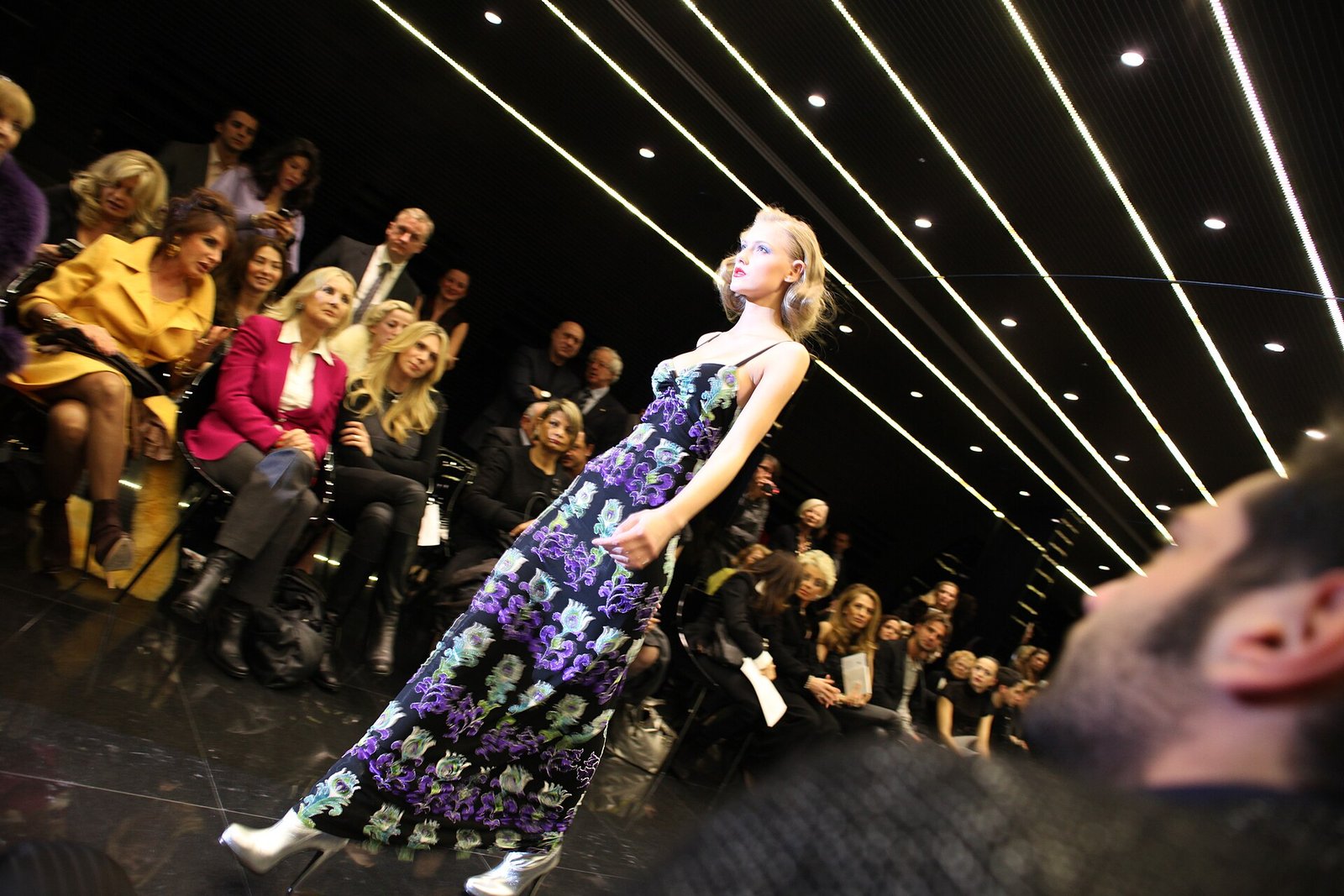
Photo: br1dotcom · CC BY-SA 2.0 · via Wikimedia Commons