Mikey Madison’s Westwood sensuality meets Wunmi Mosaku’s Siriano color at Social Reckoning premiere
The Social Reckoning premiere featured two distinct stylist strategies: sensuality with statement jewelry and bold color with structural innovation.

The October 4 New York premiere of ‘The Social Reckoning’ at the Regal Union Square drew the film’s cast for Aaron Sorkin’s dramatization of Facebook whistleblower Frances Haugen’s story. The film, which releases October 9, arrives early in the lead-up to the next awards cycle. Two looks dominated the red carpet and offer a roadmap for how stylists are approaching red-carpet positioning as the 2026-2027 awards season accelerates: Mikey Madison in Vivienne Westwood and Wunmi Mosaku in Christian Siriano.
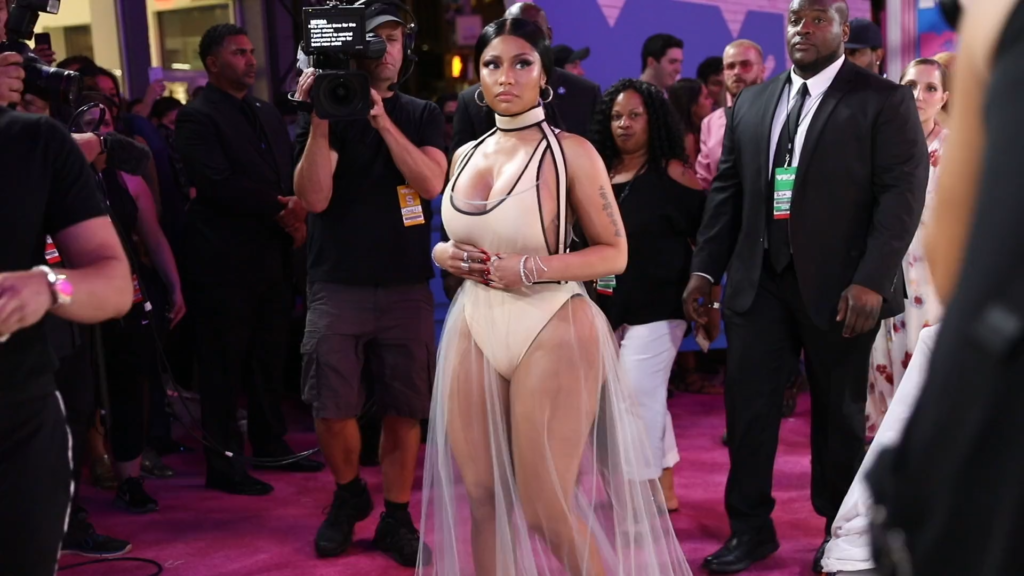
Madison’s strapless gown combined a black leotard-style bustier bodysuit beneath sheer fabric adorned with shimmering embellishments, exemplifying Westwood’s signature sensuality. Mosaku appeared in a Christian Siriano creation from the designer’s Fall 2025 ready-to-wear collection, featuring all-over royal blue sequins with a one-shoulder strap and thigh-high slit. The contrasting strategies—one emphasizing controlled transparency and luxury jewelry partnerships, the other embracing bold color and architectural structure—suggest where award-season positioning is headed as stylists prepare clients for the next phase of competition.
The Social Reckoning and awards season positioning
Aaron Sorkin’s ‘The Social Reckoning’ arrives at a specific moment in the awards calendar. Following Frances Haugen’s Facebook whistleblowing, which revealed how the platform prioritized engagement over harm, the film dramatizes both Haugen’s story and that of Wall Street Journal reporter Jeff Horwitz, played by Jeremy Allen White. The October 9 release date places the film early in the lead-up to the next awards cycle.
For actors in these early-release films, red-carpet appearances become strategic territory. They serve multiple purposes: they test how audiences and critics respond to the actor in the role, they establish visual narratives about the character before audiences see the film, and they position the actor for consideration in award categories. Madison plays Haugen, a young engineer turned whistleblower. How they dress at premieres communicates whether this is a fun, lightweight film or a serious one; whether the actors are playing archetypal roles or complex characters. In this case, both looks signal gravity and sophistication—no playfulness, no whimsy.
Andrew Mukamal’s method dressing approach
Stylist Andrew Mukamal employs ‘method dressing,’ a technique where red-carpet choices reference a performer’s character in their forthcoming film. He prepared Margot Robbie’s entire ‘Barbie’ press tour using this approach, requiring six months of advance planning. Mukamal explains that the technique ‘creates a lot of excitement and anticipation when you’re leading up to a release,’ though he emphasizes flexibility in knowing when to apply it versus emphasizing a client’s personal style.
How method dressing informs stylist choices
Andrew Mukamal, who styled Mikey Madison’s look, employs a technique called ‘method dressing’—where red-carpet choices reference a performer’s character in their forthcoming film. Mukamal began his career in editorial, interning at Esquire before working as an assistant to publicist Kelly Cutrone at People’s Revolution. He later trained under New York editorial stylists and worked as a fashion editor at Interview magazine, where he connected with emerging talent that led him to celebrity styling.
He rose to prominence styling Margot Robbie’s entire press tour for ‘Barbie,’ a campaign that required six months of advance preparation. For that project, Mukamal deployed method dressing strategically, choosing looks that reflected Barbie’s world and Robbie’s character within it. The work established him as a stylist who thinks about narrative and character alongside fashion. With Mikey Madison, his styling for ‘The Social Reckoning’ follows a pattern of deliberate choices that connect the actress to her on-screen character while allowing room for her personal style.
For Madison’s Vivienne Westwood selection, Mukamal paired the gown with Tiffany & Co. jewelry, reinforcing Madison’s existing role as the brand’s global ambassador. The jewelry choices were specific and expensive: a Bird on a Rock feathers necklace in platinum and yellow gold with diamonds, matching earrings, and a Jean Schlumberger ribbon ring featuring a rubellite over four carats. This pairing of a sensual, risk-taking dress with statement jewelry that speaks to luxury and refinement positions Madison as an actress mature enough to balance provocation with sophistication—exactly what Haugen’s character requires.
The sensuality and controlled transparency of the design, elevated by shimmering embellishments throughout the sheer fabric, suggests a shift in how Madison is being positioned for awards season. Her breakthrough came with the 2024 film ‘Anora,’ and her styling during that campaign centered on particular silhouettes and a narrower range of choice. This Vivienne Westwood selection, by contrast, experiments with texture and transparency in a refined way, suggesting stylists and studios are ready to position her as someone willing to take sophisticated risks—an important quality for an actress moving beyond breakthrough roles into sustained career building.
Christian Siriano’s automotive vision and bold color strategy
Christian Siriano drew his Fall 2025 collection from automotive design inspiration. Siriano examined ‘the movement, lines and craftsmanship shared between fashion and auto design,’ according to the designer. A Toyota Crown sat at the center of his runway show to emphasize this concept. The collection featured iridescent silks, metallic finishes, and structured silhouettes that referenced car design elements.
The designer wanted, as WWD reported, ‘a bit of defiance’ in the collection. This mattered for Wunmi Mosaku’s styling. Her gown exemplified the collection’s direction: a structured design with sinuous lines and asymmetrical details, entirely covered in royal blue sequins. The one-shoulder strap and thigh-high slit added architectural interest; the all-over sequins created a saturated jewel tone rather than a nude or neutral base.
Stylist Shameelah Hicks, who curated the overall look, completed it with sandal heels and three-tiered diamond dangle earrings. Makeup artist Keita Moore applied cool-toned eyeshadow to complement the blue, while Vernon François styled hair with volume. This styling builds on a pattern Mosaku established during her ‘Sinners’ awards run earlier in 2026, when she embraced bold colors like yellow and blue rather than defaulting to the neutral tones that have long dominated awards-season strategy.
The choice signals confidence in Mosaku as someone willing to take chromatic risks. In the broader 2026 awards season landscape, bold color has emerged as a defining trend. The Zoe Report identified butter yellow, emerald green, and baby blue as dominant hues, while E! Online highlighted molten gold, cobalt blue, and lilac as emerging must-haves. Mosaku’s royal blue sequins fit directly into this palette shift. Rather than serving as a flattering, safe choice, the color makes a statement—this is a woman who trusts her styling team and is willing to be visually distinctive on the red carpet.
Vivienne Westwood’s approach emphasizes tension and sensuality—the play between coverage and exposure, the luxury of craftsmanship visible in shimmering embellishments, and the confidence of a woman who can carry off transparency without vulnerability.
Designer philosophy and what these choices communicate
The contrast between these two looks illustrates fundamentally different designer and stylist philosophies entering awards season. Vivienne Westwood’s approach, channeled through Mukamal, emphasizes tension and sensuality—the play between coverage and exposure, the luxury of craftsmanship visible in shimmering embellishments, and the confidence of a woman who can carry off transparency without vulnerability. The sheer fabric is expensive and intentional; the black leotard beneath is structured support. This is controlled exposure, not accidental transparency.
Christian Siriano’s approach, styled by Hicks, emphasizes structural innovation and bold color as statements of modernity. The royal blue sequins are not flattering in a traditional sense—they do not recede, they do not minimize, they announce. This represents a different kind of sophistication: one that prioritizes presence over conventional flattery.
Both stylists made choices about jewelry that reinforce their strategies. Mukamal’s Tiffany & Co. selections are classical and expensive, reinforcing traditions of luxury. Hicks’s three-tiered diamond earrings are also classical and expensive, but they play a supporting role—the dress is the statement, and the jewelry merely amplifies it. These are different philosophies about what jewelry does on the red carpet: whether it commands attention or enhances a focal point.
What 2026-2027 award-season styling signals
Both looks suggest that stylists and designers are moving decisively away from the minimalist, neutral approach that has dominated recent award seasons. Both the Westwood and Siriano looks represent departures from that aesthetic.
The 2026 award season emphasized texture, color, and architectural structure, and this early red-carpet activity for the 2026-2027 cycle follows the same direction. The Zoe Report highlighted bows, scarves, and brooches as prominent accessory trends this award season, along with sheer fabrics and midriff-baring looks. E! Online emphasized that stylists are embracing unexpected silhouettes and cuts, textural play with different fabrics, and ‘bold colors, glittering metallics, and sexy lace.’
Madison’s Vivienne Westwood look fits this emerging pattern of controlled transparency with statement jewelry. Mosaku’s Siriano gown fits the pattern of bold color paired with architectural silhouettes. Neither actress wore the kind of understated, timeless gown that once defined awards-season safety. The premiere itself, then, becomes a statement about where the 2026-2027 cycle is heading: toward more visual risk-taking, more texture, more color.
The premiere also demonstrated how stylists use specific designers to communicate different things about their clients. Mukamal’s choice of Westwood for Madison emphasizes her as a serious actress entering adult roles, one sophisticated enough to balance risk and refinement. She is being positioned for lead roles in prestige films, not supporting parts. Hicks’s choice of Siriano for Mosaku emphasizes her as someone who has moved beyond her breakthrough moment into a phase where distinctive personal style—including unconventional color choice—becomes part of her public identity. She is being positioned as someone with enough confidence in her talent to take visual risks without worrying about conventional flattery.
As ‘The Social Reckoning’ rolls out to theaters on October 9 and moves through the awards season calendar, these red-carpet choices will likely set a template for how both actresses position themselves. The looks suggest less coordination with film marketing and more coordination between stylists and designers about what modern award-season elegance looks like in 2026—and it looks nothing like the neutral minimalism of years past.
Photo: Sten Rüdrich · CC BY-SA 2.5 · via Wikimedia Commons