What Protects a Garment’s Look: A 15-Year Design Patent or Trade Dress Tied to One Maker
A design patent protects a garment's ornamental look for 15 years from grant in certain applications, while unregistered trade dress needs proof that shoppers link the design to one maker.
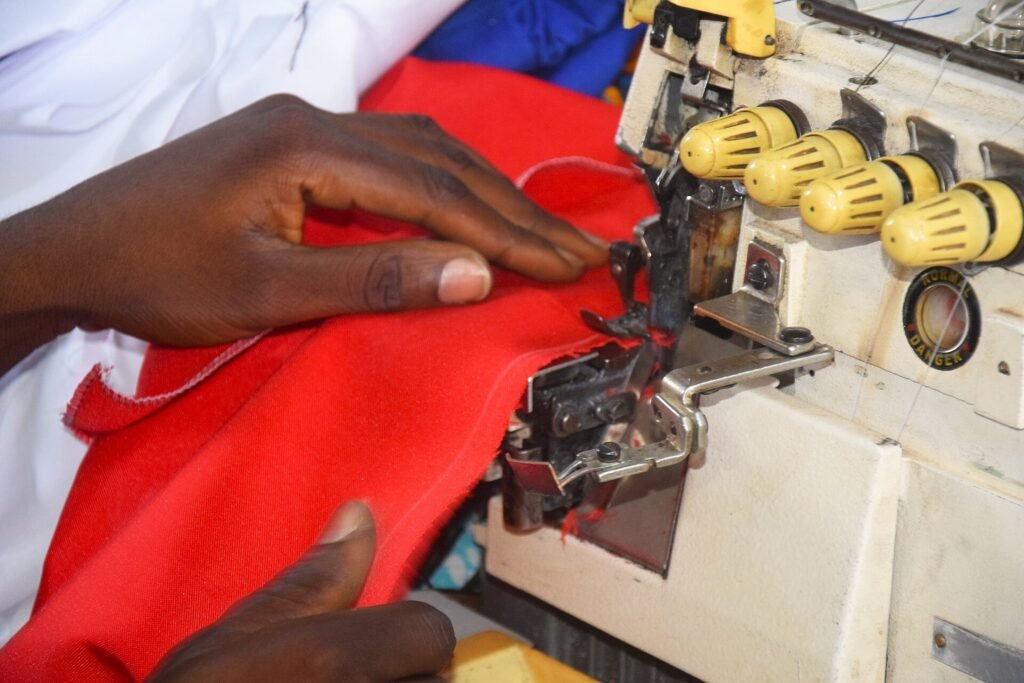
A garment’s look can be protected under U.S. federal law in two separate ways. A design patent covers the ornamental appearance of an article. Trade dress protection under the Lanham Act covers a look that identifies who makes a product. The two routes come from different laws and apply different tests.
The rules for each route are set out in the U.S. Patent and Trademark Office’s Manual of Patent Examining Procedure, the design patent statute at 35 U.S.C. 173, the Lanham Act and a 2000 Supreme Court decision on product design. The sections below cover what each route protects, when design patent protection starts and what a brand must show to rely on trade dress.
Design Patents Protect Ornamental Appearance
The USPTO’s Manual of Patent Examining Procedure recognizes three kinds of design: surface ornamentation applied to an article, the shape or configuration of an article, or a combination of the two. A picture alone is not patentable. The design must be embodied in an article of manufacture.
The design must be created for the purpose of ornamenting. The manual says it cannot be a by-product of functional or mechanical considerations. It must also be primarily ornamental, meaning the overall appearance cannot be dictated by the article’s utilitarian purpose. Ornamentality is judged on the design as a whole, not on the size of any single feature.
The manual also distinguishes between the functionality of a design and the functionality of the article itself. It says a design cannot be presumed non-ornamental just because the article seems primarily functional.
Term of a U.S. Design Patent
Under 35 U.S.C. 173, a design patent’s term is 15 years from the date of grant in certain applications. The term is not measured from the filing date.
How Examiners Weigh Ornamentality and Hidden Features
Before rejecting a design on ornamentality grounds, the examiner must make a prima facie showing of lack of ornamentality, supported by an evidentiary basis. The proper evidentiary basis is an evaluation of the appearance of the design itself. Supporting sources can include utility patents, brochures or the specification. Knowing that an article is hidden in use is not enough by itself.
Once a prima facie case exists, the burden shifts to the applicant. Under the manual, attorney arguments are not a substitute for evidence. A design that is not visible in its normal and intended use can support a lack-of-ornamentality rejection if there is no period in its commercial life when its ornamentality may be a matter of concern.
An applicant can answer that rejection with evidence that the appearance mattered to buyers during sale and that the design was created to ornament. When a claim is rejected over prior art for anticipation, hidden or functional features may not be relied on to support patentability. If an applicant does rely on them, the same ornamentality standard applies.
The 15-Year Term Runs From Grant
Under 35 U.S.C. 173, the term of a design patent is 15 years from the date of grant in certain applications. The clock therefore starts on the date of grant, not on the date the application is filed.
The statute sets the length of the term.
A 2012 amendment increased the design patent term from 14 years to 15 years. It took effect on May 13, 2015, the later of Dec. 18, 2013 and the date the Geneva Act entered into force for the United States, and it applies only to certain applications filed on and after that date and patents issuing on them.
Unregistered Trade Dress Needs Secondary Meaning
Trade dress originally covered only a product’s packaging, but courts have expanded it to cover the product’s design. In Wal-Mart Stores, Inc. v. Samara Brothers, Inc., No. 99-150, the Supreme Court decided on March 22, 2000 that a product’s design is not inherently distinctive. Under Section 43(a) of the Lanham Act, an unregistered design is protectable only upon a showing of secondary meaning. Section 43(a) reaches unregistered marks as well as registered ones. For unregistered trade dress, the party asserting protection must also prove that the matter is not functional.
Secondary meaning means the design’s primary significance to the public is to identify its source, rather than the product itself. The Court reversed the Second Circuit’s decision, reported at 165 F.3d 120, which had affirmed a district court’s denial of Wal-Mart’s motion for judgment as a matter of law. The decision was unanimous, with an opinion by Justice Scalia.
The Court reasoned that shoppers expect word marks and packaging to point to a maker. A product’s design, by contrast, is almost invariably intended not to identify its source but to make the product more useful or appealing. Word marks and product packaging can be inherently distinctive, since attaching a word or encasing a product is usually meant to identify its source. Where shoppers cannot reasonably be expected to read an affixed word or packaging as a source signal, inherent distinctiveness is not found. The Court compared design to color, which can be protected with secondary meaning but cannot be inherently distinctive.
The clock therefore starts on the date of grant, not on the date the application is filed.
Why Packaging and Design Are Sorted Differently
The Court acknowledged that separating design from packaging can be difficult. It said the frequency and difficulty of distinguishing the two will be much less than the frequency and difficulty of deciding when a product design is inherently distinctive. For close cases, it said courts should err on the side of caution and classify ambiguous trade dress as product design, which requires secondary meaning.
The Court distinguished its earlier decision in Two Pesos, which concerned restaurant décor rather than product design. Because the classification decides which test applies, the label a court gives a look determines what a brand must prove.
Two Pesos, Inc. v. Taco Cabana, Inc., 505 U.S. 763, was decided June 26, 1992. The case involved the trade dress of Taco Cabana, a Texas chain of Mexican fast-food restaurants, including interior dining and patio areas and an exterior with a festive and vivid color scheme. The Court held that inherently distinctive trade dress can be protected without proof of secondary meaning, and it affirmed the Fifth Circuit’s judgment for Taco Cabana. The Wal-Mart decision held that Two Pesos did not foreclose the Court’s conclusion on product design.
How the Two Routes Differ
The two routes answer different questions. A design patent asks whether the appearance is ornamental and, if so, is granted by the USPTO for a fixed term running from grant. Trade dress asks whether the look has come to identify a single source. In Wal-Mart (2000), the Supreme Court required a showing of secondary meaning for unregistered product design.
Each route rests on a different body of federal law.
A design patent turns on the design’s appearance. Unregistered trade dress turns on what shoppers take the look to signal in the market.