How AXIS-Y’s founder kept control while raising $130 million
Key takeaways
- MBK Partners is paying about KRW 172 billion (roughly $130 million) for a 40% stake in AXIS-Y’s parent company, valuing it near KRW 430 billion.
- The founder keeps 60% ownership and full management control, an arrangement that runs counter to MBK’s stated preference for control-oriented buyouts.
- AXIS-Y built over 90% of its revenue outside Korea before entering its home market’s Olive Young chain in 2025, a global-first sequencing the new capital is meant to extend.
AXIS-Y, a vegan skincare brand founded in Korea in 2019, is set to close a growth investment from private equity firm MBK Partners this month. MBK is paying roughly KRW 172 billion, about $130 million, for a 40% stake in Asia Master Trade Co., the company that owns the brand, at a valuation of around KRW 430 billion, about $320 million.
The deal is structured as a minority investment rather than a buyout. AXIS-Y’s founder retains 60% ownership and stays in charge of management and strategy, a detail that separates this raise from the outright brand acquisitions that have defined much of Korea’s beauty consolidation. It also runs counter to MBK’s own description of how it typically invests, which the firm says centers on taking control of the companies it backs.
The Structure: A Stake, Not a Sale
MBK Partners is buying 40% of Asia Master Trade Co., AXIS-Y’s parent, for KRW 172 billion. That values the whole company at about KRW 430 billion. Coverage of the deal converts those figures to slightly different dollar amounts, with some outlets citing roughly $130 million and $320 million and others putting the same won figures closer to $144 million and $360 million. The gap traces to different exchange-rate assumptions in each writeup rather than to a change in the underlying won figures, which are consistent across sources.
The companies say the founder keeps majority ownership and continues to run the business day to day. MBK’s stake gives it a large minority position and, presumably, board influence, but not operating control. The deal is expected to close in September 2026.
The arrangement sits somewhat apart from how MBK describes its own playbook. On its website, the firm states that it pursues investments through management-led buyouts, corporate divestitures, and taking public companies private, adding that ‘control is essential to creating value.’ MBK does run a separate special situations business that provides minority equity, equity hybrid instruments, and credit across the capital structure, though none of the companies’ announcements specify which part of the firm is behind the AXIS-Y transaction.
By the Numbers
AXIS-Y’s Dark Spot Correcting Glow Serum has sold more than 20 million units cumulatively worldwide, and the brand earns over 90% of its revenue from outside Korea, according to the companies’ joint announcement.
A Global-First Growth Path
AXIS-Y built its business by going abroad first. The brand describes itself as 100% vegan and cruelty-free, with a climate-oriented product philosophy and a development process that draws on input from its online community. It now sells in roughly 100 countries, and more than 90% of its revenue comes from outside Korea.
Its expansion sequence ran through the United States, Europe, the Middle East, Southeast Asia and the CIS region before the brand entered Olive Young, Korea’s dominant beauty retail chain, in 2025. It has kept adding new markets since, launching in Kuwait and Bahrain in August 2026. Its best-known product, the Dark Spot Correcting Glow Serum, has sold more than 20 million units cumulatively worldwide.
What Makes the Product Line Different
AXIS-Y organizes its formulas around what it calls ‘Skin Climate,’ the idea that location, weather, lifestyle and stress shape a person’s skin needs more than a fixed skin type does. The brand’s own materials describe an approach built around adapting products to daily conditions rather than sorting customers into standard skin-type categories.
Its core formulas follow a structure the brand calls ‘611’: six base ingredients aimed at general skin health, one core ingredient targeting a specific concern, and one technology ingredient meant to boost how the other ingredients perform. The brand has also built a separate line called ay&me, developed with input from more than 1,000 creators across 68 countries, folding customer feedback directly into product development.
Coverage of the funding announcement from GeneOnline noted that AXIS-Y built its international business by holding to its vegan and climate-focused standards ‘over the rapid ingredient-based trends common in the K-beauty sector,’ distinguishing its positioning from brands built around chasing a single viral ingredient.
What the Capital Is Earmarked For
According to the companies’ announcement, the investment will fund four areas: expanding online and offline distribution globally, moving into new product categories including haircare and beauty devices, investing in AI and data systems, and hiring international talent. The announcement also notes that the company has introduced an employee stock-option program for key staff and plans to expand participation as it grows; it did not specify a timetable for the new product categories.
The announcement did not break down how much of the KRW 172 billion is allocated to each of these priorities. AXIS-Y’s founder framed the raise modestly in the release, saying that ‘the valuation recognized through this transaction is meaningful, but what matters more is the long-term brand value AXIS-Y will create from here.’
The deal is structured as a minority investment rather than a buyout.
Who’s Writing the Check
MBK Partners is a Seoul-headquartered private equity firm founded in 2005 by Michael ByungJu Kim along with several other former Carlyle Group executives from Asia. It manages roughly $33 billion in assets and operates from offices across Seoul, Beijing, Hong Kong, Shanghai and Tokyo, making it one of the largest independent private equity firms in North Asia, with its strategy concentrated on Korea, Japan and China.
The firm’s most recent flagship fund, Fund VI, reached a first close of $3.5 billion in late 2023 against a $7 billion target, following a $6.5 billion prior fund. Limited partners in MBK’s funds have included Ontario Teachers’ Pension Plan, the Canada Pension Plan Investment Board, Temasek and China Investment Corporation. The firm reported deploying $3.6 billion over a recent twelve-month period, a pace it described as in line with its record levels of the preceding two years.
MBK has described Korea specifically as ‘the value market of Asia,’ with Kim saying the firm’s Korean investments have been made at roughly a 25% discount on average to comparable global companies. Its past consumer and retail deals include the 2015 acquisition of South Korean retailer Homeplus, a majority stake in Universal Studios Japan bought in 2009, Godiva Chocolatier’s Asia-Pacific operations in 2019, Lotte Card the same year, and more recent stakes in jewelry brand Tasaki and Chinese beauty and spa chain Shanghai Siyanli.
What It Signals for Beauty Funding
Deal-tracking site Dealroom, which logs private funding rounds, noted that the AXIS-Y round ranks in roughly the top 20% of funding rounds by size. Its analysis pointed to investor appetite specifically for K-beauty brands that pursue international distribution rather than staying focused on the domestic Korean market.
For other founders of fast-growing indie beauty brands, the AXIS-Y round offers one template: build revenue outside your home market first, then bring in a large private equity check structured as a minority stake so the founder keeps operating control. Whether that structure becomes more common, or whether AXIS-Y is an outlier given the scale of its international sales and MBK’s more usual preference for control deals, is not yet clear from the deal alone.
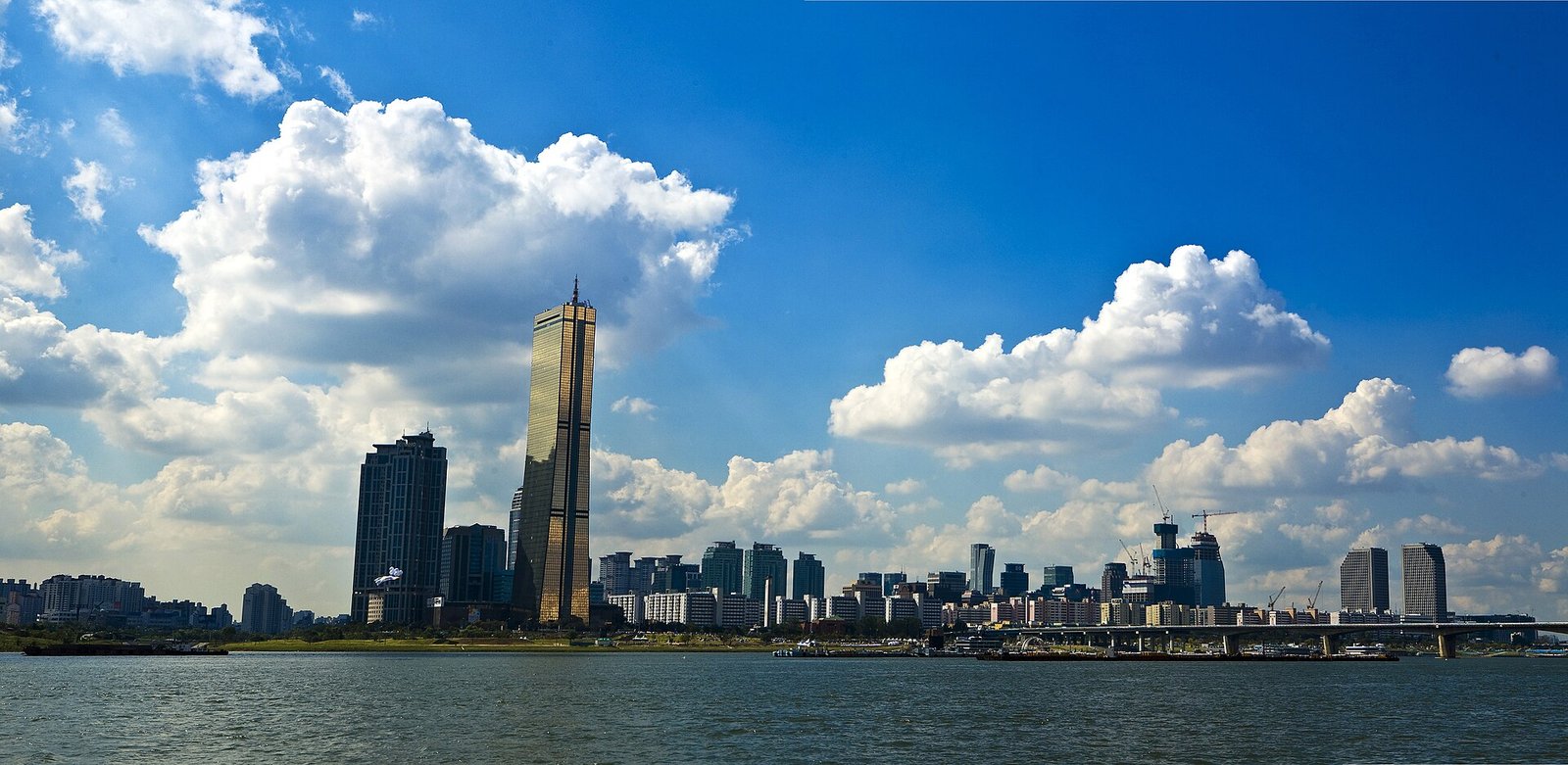
Photo: USAGI_POST · CC0 · via Wikimedia Commons