What Sephora, Ulta and Target buyers require before a brand gets shelf space
Getting your products into a major beauty retailer requires proof of sales, operational capability, and significant upfront spending.
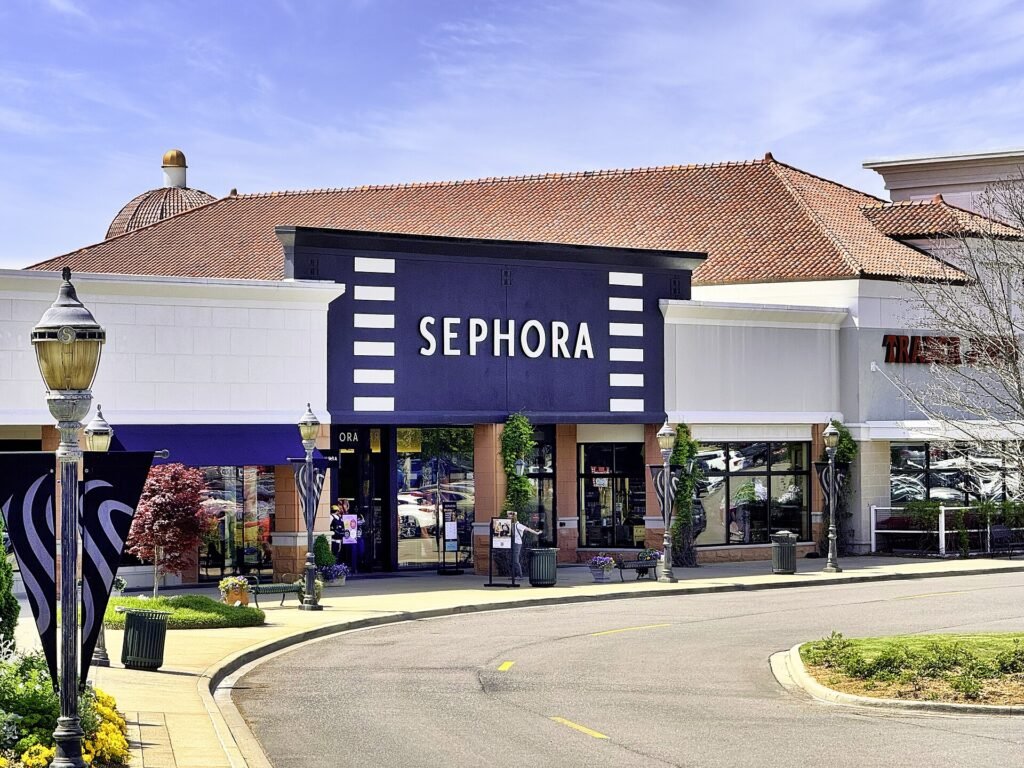
Beauty and fashion brands pursuing retail placement face a paradox: the most established retailers—Sephora, Ulta, Target—have the deepest access to customers, but they also impose the strictest requirements and highest costs. A founder pitching a new skincare line or handbag brand must demonstrate existing sales traction, operational scale, EDI integration and compliance infrastructure before a buyer will even schedule a meeting. Once the pitch succeeds, slotting fees and ongoing vendor obligations can consume six figures for a regional launch.
The criteria vary by retailer and category. Mass beauty retailers prioritize sell-through data and omnichannel readiness. Specialty retailers like Sephora demand funding for samples and staff training. What all of them share is a need to minimize risk: since 80 to 90 percent of new products fail, buyers use upfront fees and strict performance metrics to offset inventory risk. Understanding what they evaluate, what exclusivity means, and what founders actually spend is essential before approaching a buyer.
What Retailers Evaluate in a Pitch
Retail buyers receive thousands of pitches annually, and they filter for signals that a brand can execute. The first signal is proof of sales performance. Retailers want existing sales data from your direct-to-consumer site or smaller retail partners—evidence that customers will actually buy your product. A good product alone is insufficient. Buyers need to see that you have already validated product-market fit and built brand awareness independently.
The second is operational capacity. Retailers prioritize brands that can fulfill orders at scale without delays. This means documented production infrastructure, inventory management systems, and the ability to meet lead times consistently. A missed order or stockout damages retailer relationships more than a slow start.
Third is a marketing plan that shows how you will drive traffic to their stores. Retailers, especially beauty specialists, expect brands to invest in social media, influencer partnerships, and other customer acquisition channels before and during your placement. The retailer supplies shelf space and customer access; the brand supplies consumer demand.
Technical requirements are non-negotiable: Electronic Data Interchange (EDI) capability for automated ordering and invoicing, product liability insurance, unique UPC barcodes for every product variant, and complete testing documentation. Specialty retailers like Sephora add another layer: they require brands to fund free customer samples and staff training. A new product launch at Sephora often requires budgeting for free samples and staff training.
Slotting Fee Ranges by Scale
Initial slotting fees typically range from $250 to $1,000 per item per store. A regional launch may cost $25,000 to $250,000 per item. National chain rollouts can total $1.5 to $2 million in slotting fees before retail advertising and compliance chargebacks are included.
Slotting Fees and Hidden Retail Costs
A slotting fee—also called a shelving fee or slotting allowance—is money a retailer charges upfront for the right to stock a new product on its shelves, before a single unit sells. These fees exist because, according to the FTC, 80 to 90 percent of new products fail. The fee offsets the retailer’s inventory risk.
Initial slotting costs typically range from $250 to $1,000 per item per store. A regional launch of a single product across multiple stores can total $25,000 to $250,000 in slotting fees alone. A national rollout of a single product across major chains can total $1.5 to $2 million in slotting fees before accounting for other costs. Independent and specialty retailers often charge lower fees or none at all.
Slotting is not the only cost. Retailers also charge co-op advertising fees, averaging roughly 3 percent of wholesale sales. They assess chargebacks—penalties for non-compliance with specific retailer requirements such as on-time delivery or packaging standards. Some retailers, like Walmart, charge 3 percent of the cost of goods for non-compliant shipments. These costs can erase margins on large wholesale orders, which is why founders should request written terms early and factor all fees into wholesale pricing before accepting a placement.
Fees are not always fixed. Brands with strong sell-through data or compelling product positioning can sometimes negotiate lower slotting charges. One strategy is to begin with a limited regional test rather than a national launch, reducing upfront commitment for both brand and retailer.
Exclusivity Agreements and Channel Strategy
Many retailers demand exclusive arrangements: agreements that your product will be sold only through their channel for a defined period, typically three to six months. Exclusivity is particularly common with specialty retailers seeking to create buzz and differentiate their assortment.
How brands structure exclusivity varies. Some offer their entire catalog exclusively; others limit exclusivity to new or limited-edition products while maintaining direct-to-consumer sales. A three-month exclusive with a major retailer like Net-a-Porter can generate significant brand credibility and sales lift—one beauty brand reported a 30 percent increase in sales during its exclusive period. However, exclusivity also means forgoing sales through other channels during that window.
Brands are increasingly negotiating shorter exclusive periods than the standard six months, and many now emphasize omnichannel presence. The trade-off: exclusivity creates urgency for consumers and commitment from the retailer, but it conflicts with the goal of reaching customers wherever they shop. A founder must weigh whether the visibility and sales lift from exclusivity outweighs the lost revenue from other channels.
Retailers demand proof of concept: existing sales data from your direct-to-consumer site or smaller retail partners—evidence that customers will actually buy your product.
How to Prepare Your Retail Pitch Deck
Retail buyer meetings vary in length depending on the retailer and your brand profile. Your presentation should be concise, mapping your product and business into clear claims and evidence.
Start with your brand story—how and why you created the product. Include market data demonstrating category trends and consumer demand for your specific benefit or positioning. Add a competitive landscape slide showing that you understand what sets you apart from established rivals. Include financial projections showing revenue, expenses, and realistic growth potential.
Use plain language and avoid jargon. Retailer teams include buyers, merchandisers, and planners with different expertise; a slide that resonates with one may confuse another. Consistent branding, clear fonts, and white space make complex information readable. Most importantly, connect your story to the retailer’s priorities: their category strategy, their customer demographics, their growth targets. A founder pitching skincare to Sephora should show how your product serves Sephora’s core beauty customer, not just why you believe in the product.
From Pitch to Negotiation
Once a buyer shows interest, negotiation begins. Request written terms covering slotting fees, co-op advertising percentages, chargeback policies, minimum order quantities, payment terms, and exclusivity scope. Negotiate aggressively if you have compelling sales data from other channels: a brand with strong direct-to-consumer traction or proven performance in independent retail is in a stronger position to push back on fees.
Plan to operate unprofitably in your first years of retail placement. Slotting fees, co-op advertising, samples, training, and chargebacks combined can exceed gross margin on a first order. Experienced founders treat retail placement as a long-term brand-building investment, not a short-term revenue driver. Profitability typically comes only after reorder volumes increase and slotting costs are paid down.
Consider starting with independent or specialty retailers that charge lower fees or none at all. Building proof of concept with strong sell-through metrics and customer data gives you leverage to negotiate with major retailers later. A brand that has already built proof of concept with independent retailers comes to a national retailer with evidence, not hope.
Related coverage: How Sarelly Raised $3 Million to Enter 600 Target Stores With Target Beauty Studio; Why Retailers Order Fashion 4 to 8 Months Before a 6-Week Selling Window.
Photo: Harrison Keely · CC BY 4.0 · via Wikimedia Commons