How New York’s Fashion Workers Act Is Rewriting the Modeling Business
Key takeaways
- New York’s Fashion Workers Act gives models fiduciary protections, a 20% commission cap and a three-year limit on agency contracts.
- Model management companies must register with the state Department of Labor and pay fees ranging from $500 to $700; those with more than five employees must also post a $50,000 bond.
- Sources differ on the registration deadline: state guidance cites December 21, 2025 (one year after the bill was signed), while the statute’s text points to June 19, 2026 (one year after the law took effect) — both dates have now passed.
New York State’s Fashion Workers Act took effect on June 19, 2025, creating the first fiduciary duty in U.S. law between modeling agencies and the models they represent. The statute, now codified as Article 36 of the state’s Labor Law, rewrites the financial and legal relationship between models, the companies that manage their careers, and the brands, photographers and casting directors who hire them.
The law arrived after more than two years moving through the state legislature, and its central compliance deadline, registration of model management companies with the New York State Department of Labor, has now passed. Agencies, ad agencies and brands that work with models in New York were told by employment lawyers to review their contracts before that deadline passed.
A Bill Introduced on the Anniversary of the Triangle Fire
The Fashion Workers Act was introduced in March 2022, timed to the anniversary of the Triangle Shirtwaist Factory Fire, according to the Model Alliance, the advocacy group that pushed for the bill. It passed the State Senate on June 6, 2024, by a 45-16 vote and passed the Assembly the next day, June 7, 2024, according to New York State Senate records. Governor Kathy Hochul signed it into law on December 21, 2024.
The bill was sponsored by State Senator Brad Hoylman-Sigal and Assembly Member Karines Reyes, and the Model Alliance says it was backed by more than 200 models, and separately drew support from supermodel Beverly Johnson. Advocates framed the law as closing what the Model Alliance called a longstanding “legal loophole” that let model management companies avoid accountability to the people they represent.
Registration Costs
Model management companies must pay $500 (five or fewer employees) or $700 (more than five employees) to register with New York’s Department of Labor, and larger companies must also post a $50,000 bond, according to the statute’s text.
New Fiduciary Duties for Agencies
Under the law, model management companies must act as fiduciaries “with the utmost honesty and integrity, in the best interests of the models,” according to the statute’s text. That duty extends to contract negotiations, financial management and protection of a model’s legal and financial rights.
Agencies are now barred from charging models upfront fees or deposits, and cannot deduct fees beyond an agreed commission. Commissions are capped at 20% of a model’s compensation. Contracts cannot run longer than three years, cannot auto-renew without the model’s written consent, and companies must hand models a written agreement at least 24 hours before work begins. Agencies must also disclose their financial relationships with clients and are barred from retaliating against models who file complaints.
New Obligations for Brands and Photographers
The law does not stop at agencies. It also places direct obligations on “clients,” a category that includes the brands, photographers and production companies that book models. Clients must pay a 50% overtime premium for work beyond eight hours in a day, provide 30-minute meal breaks on extended sessions, carry liability insurance, and allow models to bring a representative to a job.
Law firm ArentFox Schiff has flagged an unresolved question in the statute: whether a fashion brand that books a model directly, without going through an agency, must comply with both the narrower duties written for “model management companies” and the broader duties written for “clients.” The firm describes the law’s client definition as considerably broader than its agency definition, which it says creates uncertainty for brands that handle casting in-house.
Consent Rules for AI-Generated Digital Replicas
The law defines a “digital replica” as an AI-enhanced representation of a model’s likeness, excluding routine photo editing, and requires separate, written consent before one can be created or used. Consent obtained through broad power-of-attorney language no longer satisfies the requirement: the state’s guidance states that pre-existing power-of-attorney agreements tied to modeling services that don’t meet the law’s terms became void as a matter of public policy effective June 19, 2025.
ArentFox Schiff notes a tension in how the two provisions interact, since the law simultaneously demands clear, specific consent for digital replicas while prohibiting the kind of broad power-of-attorney arrangements agencies have historically used to manage a model’s image rights.
New York’s Fashion Workers Act creates the first fiduciary duty in U.S. law between modeling agencies and the models they represent.
The Registration Deadline
Model management companies must register with the New York State Department of Labor to keep operating in the state. Registration costs $500 for companies with five or fewer employees and $700 for larger ones, and companies with more than five employees must also post a $50,000 bond. Certificates are valid for two years.
Sources describe the registration deadline differently, likely because they count from different starting points. The National Law Review reports that state guidance set December 21, 2025, as when registration had to begin — one year after Governor Hochul signed the bill. ArentFox Schiff cites June 19, 2026, as the deadline — one year after the law’s June 19, 2025, effective date, the reference point the statute’s text uses. Both dates have now passed; companies that work with models in New York should confirm current requirements directly with the Department of Labor.
Violations carry civil penalties of up to $3,000 for a first offense and up to $5,000 for subsequent ones, set by the state. Models can also bring a private lawsuit within six years of a violation, seeking actual damages, attorney’s fees and liquidated damages of up to 100% of the amount owed, rising to 300% if the violation is found willful.
Open Questions on Influencers and Reach Beyond New York
State guidance says whether the law covers social media influencers is “fact-specific,” and that agencies connecting influencers with brands for paid promotional work may fall under the statute depending on the arrangement. That leaves influencer-management firms without a bright-line answer on whether they need to register.
Writing in The Fashion Law, Harvard Law student and model Savannah Huitema predicted the law would push agencies toward revised contracts, expanded liability insurance and possible consolidation, and suggested it could shape policy discussion in other fashion capitals such as Paris, Milan and London given New York’s position in the industry. ArentFox Schiff made a similar point, saying the law is likely to have “outsized influence” beyond New York’s borders because of the city’s central role in fashion.
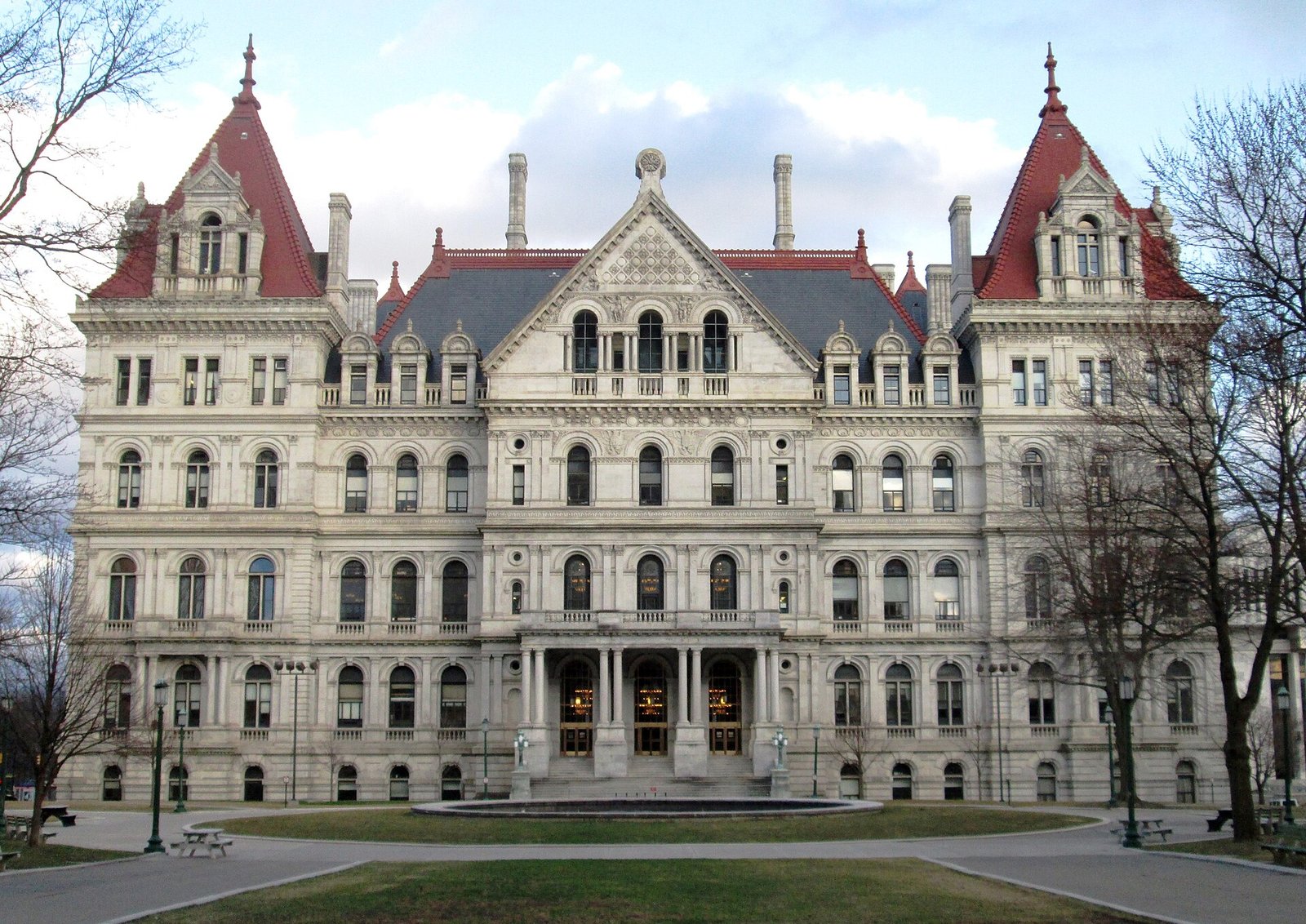
Photo: Beyond My Ken · CC BY-SA 4.0 · via Wikimedia Commons