Why La Perla is rebuilding production in Bologna before it reopens stores
The historic Bologna lingerie house brought under new ownership rebuilds through e-commerce, a Bologna-anchored supply chain, and an internal academy to preserve 72 years of craftsmanship.
La Perla is set to present Collection #00 on September 26 at Milan Fashion Week, marking the first public chapter of a controlled relaunch after years of ownership changes, financial instability and temporary closure. The historic Bologna luxury lingerie house, which faced a court-ordered asset auction in 2013 and struggled through periods of insolvency under previous ownership, is now rebuilding under American billionaire Peter Kern’s acquisition in 2025 and new Chief Executive Alessio Vannetti, appointed in September 2026.
The relaunch strategy reveals how a storied brand with deep manufacturing roots structures its return to market: by anchoring production in Bologna rather than outsourcing, controlling the pace of growth to ensure profitability, and rebuilding distribution from a low base. The blueprint centers on craftsmanship, regional supply-chain partnerships, and workforce investment rather than the rapid store expansion that once left the brand with 200 points of sale before its decline.
The path to insolvency and competitive acquisition
La Perla’s troubles began long before Vannetti’s appointment. In 2018, German investor Lars Windhorst’s private equity firm Tennor (then known as Sapinda) acquired the brand with a pledge to invest €60 million to €70 million in a relaunch. That financing never materialized. The company instead accumulated losses: according to its 2022 annual report, La Perla recorded a pre-tax loss of nearly €49 million on sales of about €69 million. In an effort to diversify revenue, the company explored new sources of income such as sales on Amazon Luxury and invested €50 million in Ralph & Russo, the British fashion house that has since closed.
An Italian court declared La Perla Manufacturing, the company’s Bologna factory subsidiary, insolvent in February 2024. The insolvency triggered a formal administration process and a competitive sale, in which multiple bidders reportedly competed for the brand and factory. Administrators ultimately selected Peter Kern’s offer, reported as approximately €25 million by some accounts and about €30 million by others. Kern’s bid may not have been the highest financial offer, but it included a crucial commitment: manufacturing and product development would remain in Bologna, a pledge that weighed heavily in the selection.
La Perla’s financial investment plan and timeline
American billionaire Peter Kern acquired La Perla’s brand and Bologna factory in a deal selected in June 2025 and finalized in September 2025, for a price reported as approximately €25 million by some accounts and about €30 million by others. The factory reopened in December 2025 with 223 workers, and an internal academy for preserving craftsmanship will launch in the first quarter of 2027.
The leadership transition and strategic priorities
Vannetti arrived at La Perla after more than two decades in senior roles at Italian luxury houses. He served as executive vice president and chief brand officer at Valentino, and in the same role at Gucci from September 2023 until the end of 2024, where he oversaw brand strategy, marketing and client engagement. He also held earlier positions at Prada and Zegna, accumulating experience across brands known for merging industrial scale with craft traditions. His appointment reflected a shift toward brand-focused leadership after Paolo Vannucchi, who served as CEO through the factory reopening in December 2025, moved to a strategic advisory role.
In interviews ahead of Milan Fashion Week, Vannetti emphasized restraint over rapid scaling. He stated the company would move at the pace it could sustain while achieving ‘healthy profitability’ and keeping up with market priorities. The two key markets are Italy and the United States. The Collection #00 lineup reinterprets La Perla’s techniques, materials and savoir-faire—the French phrase for traditional know-how—in contemporary designs, returning to the brand’s 1954 founding mission. The collection represents not a creative reinvention but a reaffirmation of the house’s core identity after years of strategic drift.
Rebuilding the Bologna production footprint
The acquisition by Kern — reported at approximately €25 million by some accounts and about €30 million by others — included both the brand name and the Bologna manufacturing facility, which had fallen into administration; the deal was selected in June 2025 and finalized in September 2025. Kern’s commitment to keep production in Bologna became a deciding factor when administrators chose his offer over competitors with potentially higher bids.
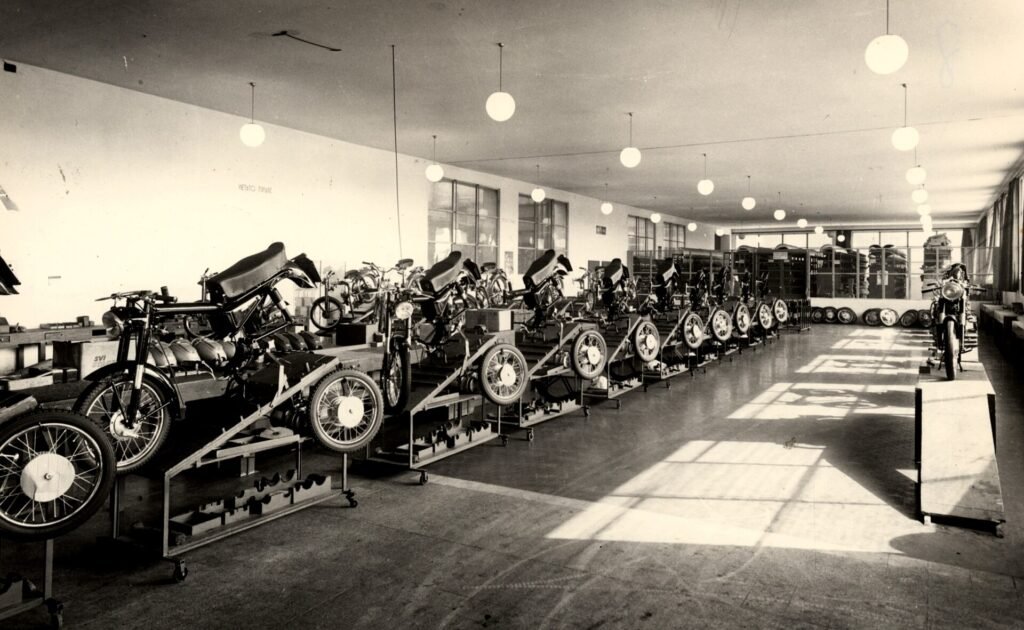
The factory reopened in December 2025 with 223 employees restored to their positions, a restoration that reversed years of layoffs under Windhorst’s ownership. Rather than rebuild through a single large-scale facility, La Perla is now organizing production through a network of small, family-run artisanal businesses across the Bologna region. This structure reflects Vannetti’s stated approach of rebuilding “from the factory, the collections and the brand’s mastery,” rather than an industrial or marketing plan that overstates the brand’s manufacturing capabilities.
Rather than rebuild through a single large-scale facility, La Perla is organizing production through a network of small, family-run artisanal businesses across the Bologna region.
Preserving craftsmanship through an internal academy
La Perla plans to launch an internal academy in the first quarter of 2027 to formalize training and apprenticeships. The academy will have current in-house staff serving as instructors, structuring knowledge transfer around the brand’s specific techniques and materials expertise. The plan signals that the relaunch is betting on building a stable, long-term workforce rather than treating labor as a cost to minimize. For a lingerie brand built on hand-finishing and precise construction, the quality of the workforce is inseparable from the quality of the product.
This investment reflects a recognition that much of La Perla’s brand equity rests in the hands of experienced craftspeople who possess tacit knowledge difficult to replace. The academy will use formal training contracts and apprenticeships to make that knowledge explicit and transferable, protecting the investment in human capital and the brand’s ability to deliver consistent product quality as it grows. The structure also signals a counterpoint to the industry trend of outsourcing labor-intensive production to lower-cost countries.
Distribution and the rebuild from a minimal base
La Perla’s current retail footprint is minimal. As of September 2026, Rinascente, the Italian department store group, was the only major retailer carrying the brand, compared to the roughly 200 points of sale that distributed it before its decline under Windhorst. This narrow base provides a constraint but also an advantage: the brand can rebuild distribution deliberately rather than managing a portfolio of existing relationships that may have deteriorated during the insolvency period. The immediate focus is on reputation restoration and product coherence rather than rapid expansion.
La Perla has built a newsletter list of about 100,000 subscribers as it prepares to launch a full-fledged e-commerce site, according to WWD, alongside its existing retail partnership with Rinascente. The Collection #00 presentation at Milan Fashion Week serves as a signalling mechanism to the industry—demonstrating that the brand is operational, creatively coherent, and ready to engage buyers and press. The compressed timeline—factory reopening in December 2025, Vannetti’s appointment in September 2026, and the Milan presentation in September 2026—reflects the pace at which the relaunch has moved, even as Vannetti has emphasized sustainable, controlled growth over rapid expansion.
Photo: Unknown author Unknown author · Public domain · via Wikimedia Commons