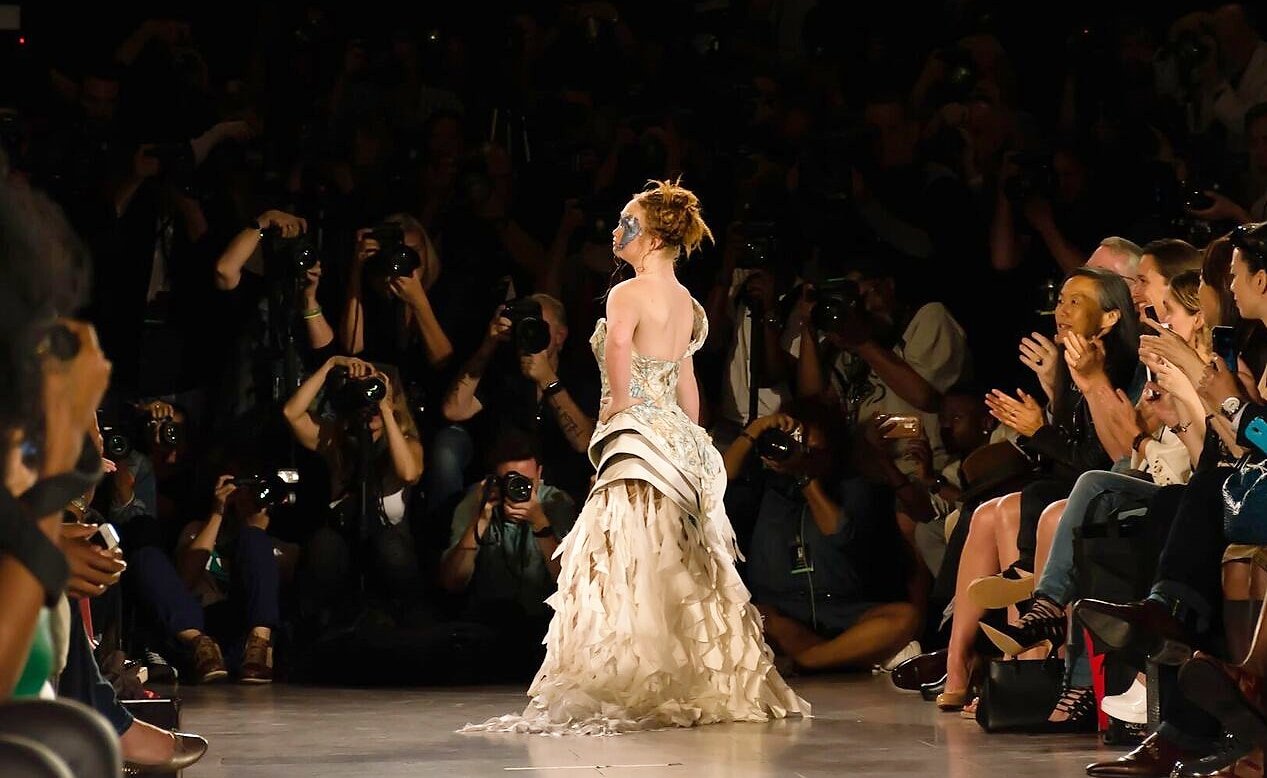
Monse, threeASFOUR and Tommy Hilfiger return to New York Fashion Week’s calendar
Key takeaways
- Designer returns to the official NYFW schedule require advance retail commitments and demonstrate resolved financial or strategic challenges
- Luxury-athleisure collaborations now function as complete product lines with multi-season commitments, not limited-edition marketing stunts
- The CFDA’s new fur-free policy forces returning designers to develop new design narratives and differentiation strategies beyond heritage techniques
The September 2026 New York Fashion Week calendar, featuring 70 runway shows and designer presentations from September 10 to 15, reflects a strategic shift in how fashion houses manage their presence and growth. Three major designers are returning to the official schedule—Monse, threeASFOUR, and Tommy Hilfiger—while the Celine x Reebok collaboration launches on day one, signaling how brands are repositioning themselves through both comebacks and partnerships.
Designer returns have become deliberate business moves rather than simply reappearing after time away. Each comeback carries calculation: testing market appetite, leveraging nostalgia, or repositioning within changing consumer preferences. The returning designers’ choices about timing, scale, and retail strategy determine whether they succeed in recapturing audience and market share. These moves matter not just for individual brands but for what they reveal about how the fashion industry plans growth and manages risk heading into 2027.
Getting on the Official Calendar: What It Means
The official NYFW schedule operates under a formal application and selection process administered by the CFDA, which acquired the Fashion Calendar in 2014 and established standardized criteria for inclusion. Designers submit applications to appear on the official schedule; applications for the September 2026 season closed on May 20, 2026. Not every designer seeking to show in New York gains access to the official calendar. Some brands present off-calendar, which means without CFDA endorsement or inclusion in the official schedule materials.
The distinction between official and off-calendar shapes wholesale buying behavior and press coverage. Being on the official NYFW schedule signals to department stores, boutiques, and fashion retailers that a brand has met CFDA standards and maintains sufficient business infrastructure to sustain retail relationships. Buyers plan inventory commitments around the official calendar. Press aggregates official-schedule shows into coverage plans. A designer returning to the official calendar is not simply returning to New York; they are returning to the curated, competitive ecosystem where the fashion industry’s largest purchasing decisions occur.
The preliminary September 2026 schedule features 70 runway shows and designer presentations, along with additional collections premiering by appointment and digitally. This structure reflects how NYFW operates: the official calendar accommodates established and emerging designers, with established houses providing financial stability and celebrity attention, while emerging designers—often CFDA/Vogue Fashion Fund finalists—provide cultural relevance and press novelty. The returning designers joining this ecosystem have cleared hurdles that many brands fail: securing financing, maintaining design standards, and convincing retailers they will deliver sustained product.
The NYFW Application and Selection Process
Designers submit applications to the CFDA to appear on the Official NYFW Schedule, which features 70 runway shows and designer presentations for September 2026. The CFDA, which acquired the Fashion Calendar in 2014, administers formal selection criteria. Being on the official schedule signals to retailers that a brand meets CFDA standards and maintains business infrastructure to sustain retail relationships, distinguishing official calendar brands from off-calendar presentations.
The Economics of Returning to the Runway
When a designer brand steps away from the runway, the market interprets the absence as either financial strain or deliberate strategic repositioning. The length of absence shapes how the return is understood. Monse, threeASFOUR, and Tommy Hilfiger each face different market perceptions based on how long they have been away and what competitive landscape has shifted during their absence.
A return requires advance retail commitments before a single garment is shown. Department stores like Saks Fifth Avenue, Nordstrom, and Neiman Marcus plan inventory for the upcoming season based on the official NYFW calendar; they need to know which designers will present and when. A designer announcing a return must simultaneously line up wholesale distribution, secure retail shelf space, and convince buyers that their collection merits the same floor space or online inventory slot as competing brands. This is why fashion-industry observers watch not just which designers return, but which retail partners announce that they have committed to carrying returned collections.
Financial institutions and investors interpret calendar returns as positive signals about a brand’s trajectory. A designer brand accessing capital for production, marketing, and infrastructure improvements is more likely to fund a runway return once financial health is restored. The three returning designers likely secured financing—whether through private equity, family offices, or traditional lending—before committing to the production and marketing costs of a NYFW show. This means each return represents not just a design decision but a financial decision that a brand’s investors believe next season is the right moment to recenter the brand in the official calendar.
Luxury Collaborations as Strategic Market Entry
The Celine x Reebok partnership addresses a specific market opportunity: premium athletic footwear at luxury price points. The collaboration releases eight colorways of the Reebok Freestyle Lo through Celine stores and online, with availability beginning September 10, 2026—day one of NYFW. The Reebok Freestyle, introduced in 1982, holds particular significance: it was the first athletic shoe designed specifically for women, making it a heritage product with embedded meaning for female athletes and casual sneaker consumers alike.
Creative director Michael Rider’s reinvention of the Freestyle in distressed lambskin leather—offered in eight Celine-specific colorways including White, Dark Brown, and Black—signals that the collaboration is not simply a branded version of an existing shoe but a complete aesthetic reimagining.
The partnership also addresses production and capital risk. By collaborating with Reebok rather than building footwear manufacturing capability in-house, Celine transfers production complexity and capital investment to an established sneaker manufacturer. Reebok gains luxury retail access and prestige association. Each brand extracts value from the partnership that would be difficult to generate independently: Celine enters premium athletic footwear without building supply chains, and Reebok reaches customers willing to pay luxury prices for heritage reinterpretation.
The September 10 launch timing—opening day of NYFW—reflects calculated market strategy. Fashion week concentrates high-income consumers, fashion press, and social media influencers in New York for a defined week. Street-style photographers document attendees wearing new collections and collaborations. Images spread across social media platforms reaching fashion enthusiasts globally. By launching day one, the Celine x Reebok Freestyle becomes the visible symbol of the week’s luxury-athleisure convergence.
What the Calendar Reflects About Industry Direction
The schedule of 70 runway shows and designer presentations includes established houses like Calvin Klein Collection, Carolina Herrera, and Tory Burch, alongside new additions to the official calendar drawn from emerging talent. This mix reflects fashion industry economics: established houses with stable revenue streams fund and stabilize the fashion calendar’s infrastructure, attracting institutional support and press attention, while emerging designers provide cultural relevance and signal that the industry is discovering fresh voices. The addition of new designers to any season’s calendar reflects CFDA strategy to refresh the calendar while honoring heritage participation.
The September 2026 calendar also marks implementation of the CFDA’s fur-free policy across all brands showing on the official schedule. The policy, announced in September 2025, eliminates one traditional source of creative differentiation: heritage fur techniques and rare pelts. For returning designers, this constraint requires updated design narratives. A brand that previously built identity around fur craftsmanship must develop new selling points: innovative fabrics, tailoring techniques, color palettes, or market positioning that differentiate the collection without reliance on fur.
The policy also reflects broader industry movement toward transparency and sustainability concerns. Luxury houses increasingly communicate their production practices to consumers who increasingly ask questions about animal welfare and environmental impact. The fur-free mandate pushes designers toward alternative materials and techniques, which creates both constraint and opportunity: constraints force innovation, but successful innovation can become new brand identity that attracts consumers who value the environmental or ethical position.
A designer returning to the official calendar is not simply returning to New York; they are returning to the curated, competitive ecosystem where the fashion industry’s largest purchasing decisions occur.
From Limited Editions to Multi-Season Partnerships
The shift from limited-edition designer collaborations to multi-season partnerships reflects fundamental change in how brands approach partnerships. Victoria Beckham’s collection with Gap, described as a 38-piece offering injected with her chic and tailored aesthetics, spans multiple seasons. Stella McCartney’s renewed partnership with H&M reimagines archival styles and pieces in a capsule collection available in select stores and online. These commitments require deeper integration between brands: shared design teams working continuously, aligned supply chains for multiple production cycles, and coordinated retail rollouts spanning seasons.
This model serves both established and emerging parties differently. An established designer using a multi-season partnership with a mass-market retailer gains access to volume and a younger demographic without building their own retail infrastructure. A mass retailer gains luxury cachet and creative direction from an established name. The commitment model also signals to consumers that the collaboration is serious: not a marketing stunt designed to generate week-of-launch press, but a sustained product line that will be refined and expanded.
Multi-season partnerships also reduce financial and market risk. A single designer collaboration that underperforms in its initial weeks is absorbed into existing operations; press moves on, and the brand continues. A multi-season partnership structures expectations differently: success is measured over time, with room for iteration and adjustment. This long-term framing makes partnerships more attractive to cautious luxury houses and established retailers skeptical of one-off celebrity collaborations. If a collaboration is expected to run for three seasons, both parties are more likely to invest in deeper integration and longer-term brand alignment.
Retail Strategy and Wholesale Dynamics
Designer returns and brand collaborations visible on the September 2026 NYFW calendar reveal how the fashion industry plans wholesale buying for the 2027 selling season. Fashion weeks are not consumer events; they are wholesale markets where retailers commit to inventory six months before customers see products in stores. A designer returning to the official calendar is securing retail commitments now that will translate into store floor space in early 2027.
The three returning designers (Monse, threeASFOUR, and Tommy Hilfiger) each represent different retail opportunities. Established heritage brands like Tommy Hilfiger have existing wholesale relationships across department stores and specialty retailers; their return tightens those relationships and signals renewed investment in the brand. Emerging-to-established brands like Monse and threeASFOUR operate in boutique and fashion-forward retail, where selection is more curated and brand relationships with buyers run deeper. Their returns signal to specialty retailers that these brands have resolved whatever challenges caused their absence.
For fashion-industry observers watching wholesale buying and retail planning, the September 2026 calendar reveals market confidence about which brands and aesthetics will resonate in 2027. When department stores and specialty retailers commit to returning designers’ collections, they are predicting that consumers will purchase those brands. When Celine launches its Reebok Freestyle Lo collaboration on opening day, it signals luxury retailers are betting that consumers will pay premium prices for heritage sneaker reinterpretation. These predictions, aggregated across 70 shows and hundreds of retail commitments, reveal what the fashion industry believes consumers will want to wear next year.
Positioning for 2027
The returning designers and new collaborations on the September 2026 NYFW calendar reveal how the fashion industry plans its next phase. Designer returns indicate market confidence in specific brands or aesthetics after periods of absence or silence. Luxury-athleisure collaborations signal that the boundary between performance and fashion continues blurring at premium price points, and that established athletic brands see partnership with luxury houses as a path to higher price positioning. The overall calendar—70 shows, three returns, multiple new entries, and the CFDA’s first fur-free season—reflects an industry simultaneously honoring heritage and embracing strategic change.
The returning designers’ success will depend on execution: whether their new collections match what retail buyers expected when committing to inventory, whether consumers respond to redesigned aesthetics, and whether the multi-season partnerships launching alongside them sustain momentum beyond opening season. The Celine x Reebok Freestyle will likely influence street style during fashion week, but sustained success depends on whether luxury retailers integrate the sneaker into their full footwear strategy and whether consumers purchasing at luxury price points see the reinterpreted Freestyle as distinct enough to justify premium pricing over standard athletic options.
Photo: Lilly-Ann Tonner · CC BY-SA 4.0 · via Wikimedia Commons