Why federal and New York law classify models differently as employees or contractors
The distinction affects models' access to benefits, wage protections, and legal remedies—but federal law and state rules create conflicting classifications.
In the United States, whether a fashion model is classified as an employee or independent contractor is not clearly determined by their title or contract language. Instead, labor law looks at the economic realities of the working relationship. That classification carries major consequences: it determines whether models receive minimum wage, overtime pay, unemployment insurance, health benefits, and protection from harassment.
Federal labor law and New York state law apply different standards to make this determination, creating confusion in an industry where models are traditionally treated as independent contractors. Meanwhile, modeling agencies and the brands that book them face liability if they misclassify workers.
The economic reality test for federal labor law
The Fair Labor Standards Act (FLSA), the federal law governing wage and hour protections, does not rely on what a contract calls a worker. Instead, it uses an “economic reality test” with six factors to determine whether someone is truly an employee or an independent contractor. No single factor determines the outcome; courts weigh all of them together.
The six factors are: whether the worker can earn profits or suffer losses through independent decisions, such as negotiating rates; whether the worker makes capital investments that support their business; whether the work relationship is permanent or sporadic; the degree of control the company exercises over the worker’s schedule, methods, and pricing; whether the work is integral to the company’s core business; and whether the worker uses specialized skills combined with business planning to grow their own venture.
Applied to modeling, these factors cut both ways. Models typically negotiate their own rates and can work for multiple agencies—suggesting contractor status. But modeling agencies typically control when models are available, what they wear, how they present themselves, and the exact terms of each booking—suggesting employee status. The integral-to-business test also leans toward employee classification, since models’ labor is the core product agencies sell.
New York Fashion Workers Act implementation timeline
The Fashion Workers Act took effect June 19, 2025, establishing deal memo requirements, 20% commission caps, 50% overtime premiums for work beyond eight hours daily, and mandatory sexual harassment policies.
What employee status means for models’ protections
If classified as employees under the FLSA, models would be entitled to minimum wage (at least $7.25 per hour federally, or more in states with higher minimums), overtime compensation of at least one and a half times their regular rate for hours beyond 40 per week, recordkeeping and payment protections, and protection from retaliation for reporting violations. They would also qualify for unemployment insurance if they were let go.
As independent contractors, models receive none of these protections. They are responsible for paying self-employment taxes and must negotiate their own rates for each job, with no guaranteed minimum or overtime premium. If they face wage theft—such as an agency deducting unjustified fees—they have fewer legal remedies than employees.
The misclassification matters especially for models working consecutive bookings or for one agency for extended periods. A model working eight bookings a week at eight hours each would earn at least 1.5 times their hourly rate for all hours beyond 40—a substantial difference. As an independent contractor, that same model receives no overtime premium.
The paradox in New York state law
New York creates a peculiar situation: New York Labor Law Section 511 classifies models as employees for unemployment insurance purposes, meaning they can collect unemployment benefits if work ends. Yet most modeling contracts treat them as independent contractors, and the state has not comprehensively resolved which status applies for other labor protections.
This legal ambiguity gives both models and agencies little guidance. Some models may be classified as contractors in their agreements but still entitled to employee protections under the economic reality test. Modeling agencies face uncertainty about which rules apply and what liabilities they carry.
Job titles, 1099 forms, or independent contractor agreements don’t determine status—economic realities do.
New York’s Fashion Workers Act fills some gaps
On June 19, 2025, New York’s Fashion Workers Act took effect, establishing new rules for modeling agencies in that state. The law does not explicitly resolve the employee-versus-contractor question, but it imposes requirements that blur the distinction by establishing protections typically reserved for employees.
The Act requires agencies to provide models with deal memos specifying total compensation and payment terms before work begins. It caps commissions at 20 percent and prohibits signing fees or deposits. Models must receive at least 50 percent premium pay for work exceeding eight hours in a 24-hour period—a wage floor similar to overtime protections. Agencies must adopt sexual harassment prevention policies and obtain written consent before using a model’s digital likeness.
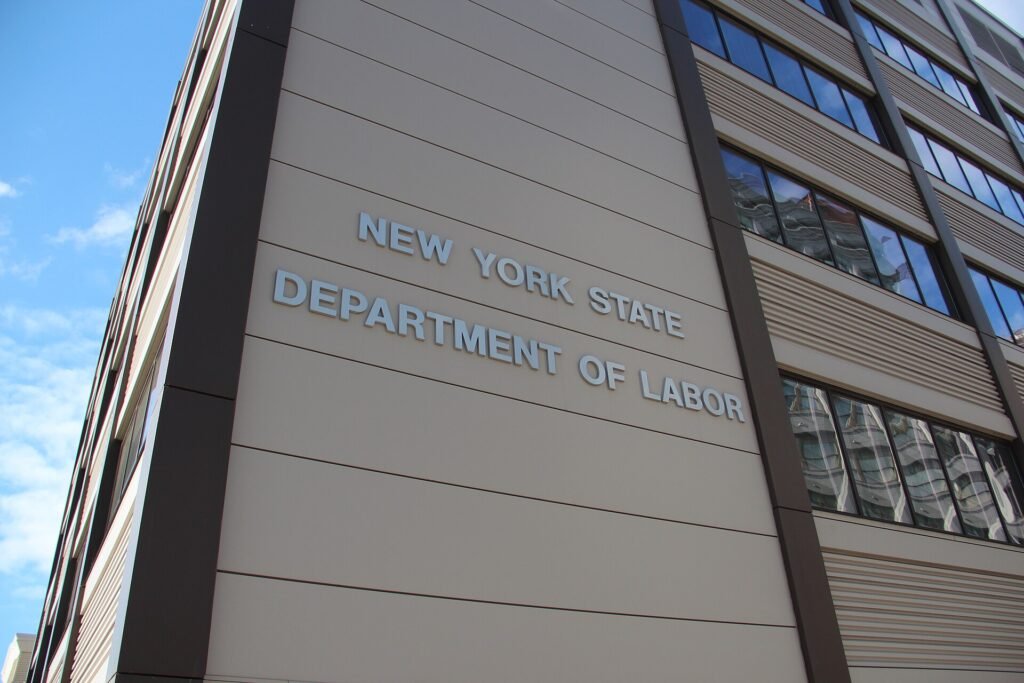
Representation agreements cannot exceed three years and cannot automatically renew. Power-of-attorney agreements, which agencies historically required, are now optional and cannot cover a model’s digital replica. Models can report violations to the state Department of Labor or pursue civil lawsuits for damages and attorney’s fees.
What liability these laws create for agencies and brands
If a modeling agency or brand that books models is found to have misclassified an employee as a contractor, it can face back wages, overtime pay, penalties, and attorney’s fees. The liability extends to both agencies and to fashion brands that directly hire models and treat them as contractors without meeting the economic reality test.
New York’s Fashion Workers Act created additional state-specific liability. Violations can result in complaints to the Department of Labor, civil lawsuits by models, actual damages, reasonable attorney’s fees, and liquidated damages—doubling the compensation in some cases.
The practical effect is that agencies and brands must now evaluate their classification practices against the federal economic reality test and New York’s new standards. A model who works regularly for one agency, has limited control over their bookings, and is engaged in work central to the agency’s business may have a strong argument for employee status under federal law—regardless of the contract language.
Photo: Thomson200 · CC0 · via Wikimedia Commons